
 Eng
Eng  中文简体
中文简体Home / News / Industry News / What Makes a Heavy Duty Motorcycle Chain the Right Choice for Your Ride?
Submit feedback
What Makes a Heavy Duty Motorcycle Chain the Right Choice for Your Ride?
Update:22-05-2026
Posted by Admin
Content
- 1 What Is a Heavy Duty Motorcycle Chain and Who Needs One?
- 2 Understanding Motorcycle Chain Sizing and Pitch Designations
- 3 Chain Seal Types: O-Ring, X-Ring, and Z-Ring Explained
- 4 Key Specifications to Compare When Selecting a Heavy Duty Chain
- 5 Material and Surface Treatment Options for Extended Durability
- 6 Top Heavy Duty Motorcycle Chain Brands and What Sets Them Apart
- 7 Maintenance Practices That Maximize Heavy Duty Chain Life
- 8 When to Replace Your Heavy Duty Motorcycle Chain
What Is a Heavy Duty Motorcycle Chain and Who Needs One?
A heavy duty motorcycle chain is a roller chain engineered to withstand significantly higher tensile loads, shock forces, and operating stresses than standard OEM-grade chains. While a factory-fitted chain on a commuter or mid-size motorcycle is designed to meet average load conditions under normal use, heavy duty chains are built with reinforced side plates, higher-strength pins, thicker rollers, and — in most cases — advanced sealing systems that retain grease within each link joint for the life of the chain. These design enhancements make them the appropriate choice for high-displacement motorcycles, performance bikes, adventure tourers carrying heavy loads, motocross and enduro machines, drag racing applications, and any rider who puts their drivetrain under consistent high stress through aggressive riding, sustained high-speed highway use, or off-road terrain.
The distinction between a standard chain and a heavy duty chain is not merely a marketing label — it is reflected in measurable specifications including tensile strength, fatigue life, seal type, and material grade. A heavy duty chain on a 1,000cc sport bike or a large-displacement adventure tourer must transfer engine torque of 100 Nm or more through the sprocket and chain system thousands of times per minute under sustained load. The consequences of a chain failure at speed range from sudden loss of power to catastrophic rear wheel lockup, making the selection of a correctly rated heavy duty chain a genuine safety consideration rather than a performance upgrade.
Understanding Motorcycle Chain Sizing and Pitch Designations
Motorcycle chains are classified by a three-digit number that encodes the chain's pitch, inner width, and roller type. Understanding this numbering system is the first step in identifying the correct heavy duty replacement chain for any motorcycle. The first digit indicates the chain pitch in eighths of an inch — the distance from one pin center to the next. The second and third digits together indicate the inner width of the chain in eighths of an inch. A chain marked 520, for example, has a pitch of 5/8 inch and an inner width of 2/8 (1/4) inch, while a 530 chain has the same pitch but a wider 3/8 inch inner width.
For heavy duty applications, the most relevant chain sizes are the 520, 525, 530, and 630 series. The 530 series is the traditional standard for large-displacement street motorcycles due to its wider cross-section and correspondingly higher load capacity. The 520 series — though narrower and lighter — is popular in performance and racing applications where weight reduction is prioritized, often used with converted sprocket sets on bikes originally fitted with 530 chains. The 630 series is reserved for the heaviest-duty applications including large cruisers, sidecars, and some older shaft-to-chain converted touring bikes where maximum chain strength is the overriding requirement.
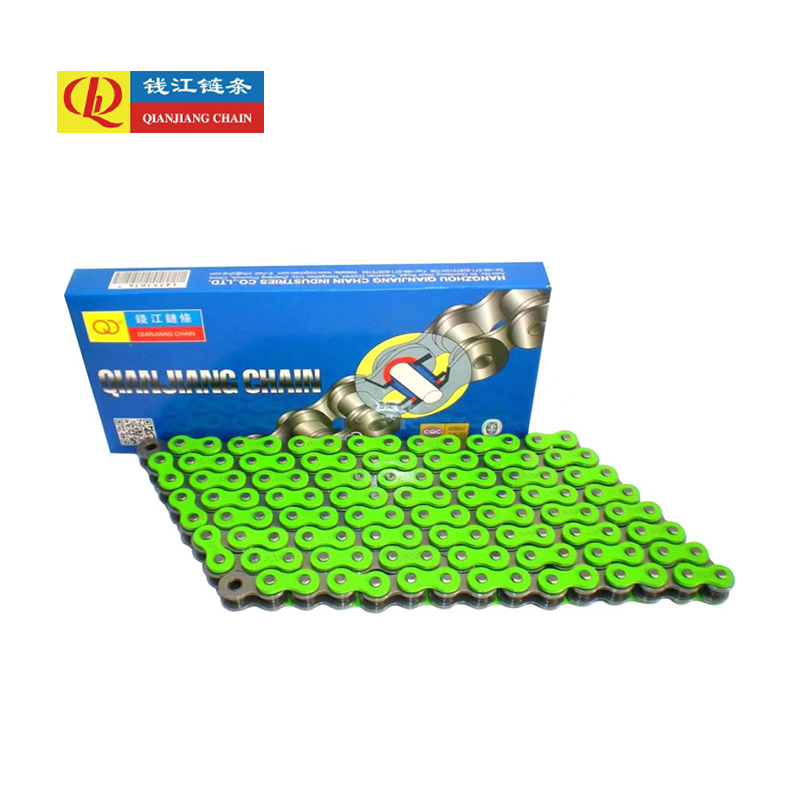
Chain Seal Types: O-Ring, X-Ring, and Z-Ring Explained
The sealing system used in a heavy duty motorcycle chain is one of the most important factors determining its service life, maintenance interval, and frictional efficiency. Unsealed or standard roller chains rely entirely on external lubrication to keep the pin and bushing surfaces from wearing, which means they require frequent cleaning and re-lubrication — sometimes every 200 to 500 kilometers in demanding conditions — and have a significantly shorter service life than sealed alternatives. All quality heavy duty chains use one of the following sealed designs:
O-Ring Chains
O-ring chains use circular cross-section rubber seals pressed between the inner and outer side plates on each side of every link. These seals retain factory-packed grease around the pin and bushing interface, dramatically reducing internal wear from metal-to-metal contact. O-ring chains were the first sealed motorcycle chain technology to achieve widespread adoption and remain a cost-effective choice for standard heavy duty applications. The circular O-ring cross-section creates sealing contact along a single circular line, which is effective but generates slightly more friction than more advanced seal geometries, resulting in a minor efficiency penalty compared to X-ring designs.
X-Ring Chains
X-ring chains replace the circular O-ring with a seal having an X-shaped cross-section, which creates four sealing contact lines rather than one. This design simultaneously reduces the contact area between the seal and the side plates — lowering frictional drag by 30 to 50 percent compared to O-ring chains — while providing superior lubricant retention due to the double-lip geometry on each sealing face. X-ring chains offer longer service life, lower operating temperature, and better fuel efficiency than comparable O-ring chains, making them the preferred choice for performance motorcycles, long-distance touring, and any application where drivetrain efficiency and extended maintenance intervals are valued.
Z-Ring and Other Advanced Seal Designs
Z-ring chains use a proprietary seal geometry developed by specific manufacturers — most notably DID with their ZVM-X series — that further optimizes the balance between sealing effectiveness and frictional resistance. These advanced seal designs typically produce lower friction losses than standard X-rings while maintaining equivalent or superior lubricant retention. Some manufacturers also offer chains with quadrilateral or hexagonal seal profiles targeting specific high-performance niches. For heavy duty street and sport touring applications, X-ring and Z-ring chains represent the current state of the art in sealed chain technology and are the specifications found in the premium product lines of all major chain manufacturers.
Key Specifications to Compare When Selecting a Heavy Duty Chain
Beyond seal type and pitch size, several technical specifications directly determine whether a heavy duty chain is appropriate for a given application and how it will perform over its service life. The following table summarizes the most critical parameters:
| Specification | What It Measures | Heavy Duty Benchmark |
| Tensile Strength | Maximum pulling force before chain breaks | 8,500 – 10,500 lbf (530 series) |
| Fatigue Strength | Resistance to failure under repeated cyclic loading | Higher in heat-treated side plate designs |
| Side Plate Thickness | Physical thickness of the link side plates | Thicker plates = higher load capacity |
| Pin Diameter | Diameter of the connecting pins | Larger diameter resists shear and bending |
| Seal Type | Internal lubricant retention design | X-ring or Z-ring for premium performance |
| Surface Treatment | Corrosion and wear protection coating | Nickel plating, chrome, or DLC coating |
| Weight per Link | Mass of the chain per unit length | Lower weight improves acceleration and handling |
Material and Surface Treatment Options for Extended Durability
The base material and surface treatment applied to the chain components — pins, bushings, rollers, and side plates — have a direct impact on wear resistance, corrosion resistance, and service life. Standard heavy duty chains use carbon steel side plates and pins with conventional heat treatment processes to achieve the required tensile and fatigue strength. Premium heavy duty chains go further with several enhanced material and treatment options:
- Nickel Plating: A thin electrodeposited nickel layer applied over the steel components provides a significant improvement in corrosion resistance compared to bare steel, making nickel-plated chains well-suited for wet weather riding, coastal environments, and anywhere road salt exposure is a concern. Nickel plating also gives the chain a distinctive silver appearance that many riders find aesthetically preferable to standard chains.
- Chrome and Gold Plating: Primarily chosen for aesthetic purposes on custom and cruiser motorcycles, chrome and gold-plated chains offer similar or slightly better corrosion protection than nickel plating. Gold-colored chains — achieved through titanium nitride or brass plating — are popular on sports bikes as a cosmetic upgrade and provide marginally better surface hardness than standard nickel plating.
- Diamond-Like Carbon (DLC) Coating: An advanced physical vapor deposition coating applied to the chain pins and bushings, DLC provides extreme surface hardness (approaching that of diamond), very low coefficient of friction, and excellent corrosion resistance. DLC-coated chains are found in the top tier of racing and performance chain products and command a significant price premium, but deliver measurably lower drivetrain friction losses and superior wear resistance compared to conventionally treated chains.
- Heat-Treated Side Plates: Carbonitriding or induction hardening of the side plates increases their fatigue resistance under cyclic loading, which is the primary failure mode of high-performance chains under racing or aggressive street conditions. Heat-treated side plates allow the chain to withstand the bending stress imposed each time a link engages and disengages with the sprocket teeth without developing the micro-cracks that eventually lead to fatigue fracture.
Top Heavy Duty Motorcycle Chain Brands and What Sets Them Apart
Several manufacturers have established strong reputations for heavy duty motorcycle chain quality through decades of product development, motorsport involvement, and rigorous quality control. Understanding the positioning of the leading brands helps riders and mechanics make informed purchasing decisions aligned with their specific performance and budget requirements.
- DID (Daido Industrial): A Japanese manufacturer widely regarded as the global benchmark for premium motorcycle chains. DID's ERV3 and ZVM-X series are factory-fitted on superbikes from Honda, Yamaha, Kawasaki, and Ducati, and their racing chains are used across MotoGP and World Superbike Championship. DID chains are noted for their precision manufacturing tolerances, advanced Z-ring seal technology, and consistent quality across production batches.
- RK Excel: Another Japanese manufacturer with a strong motorsport heritage, RK produces the GB series (gold) and XW-ring series heavy duty chains that are popular across sport, touring, and off-road segments. RK chains are a common OEM fitment on Suzuki and Honda motorcycles and are known for competitive pricing within the premium segment.
- EK Chain (Enuma): EK's MVXZ-2 and QX-Ring series chains are well-regarded in the performance street and track day community. EK has particular strength in the 520-conversion market for sport bikes, offering complete drive kit packages that include chain and matched sprockets for riders seeking to reduce unsprung weight through a pitch-size downgrade.
- Regina: An Italian manufacturer with a long history in road racing, Regina chains are used extensively in European road racing series and are available in high-specification X-ring and ORN (O-ring) variants. Regina chains are notable for their traditional manufacturing approach and are a popular choice among European motorcycle enthusiasts.
Maintenance Practices That Maximize Heavy Duty Chain Life
Even the highest-quality heavy duty motorcycle chain will wear prematurely if it is not maintained correctly. The external surfaces of sealed chains — the rollers, outer side plates, and the contact faces between rollers and sprocket teeth — still require regular cleaning and lubrication even though the internal pin-and-bushing interface is sealed. Dirt and abrasive particles that accumulate on the chain's external surfaces accelerate roller and sprocket tooth wear, reduce chain flexibility, and increase the rate at which the chain pitch elongates through the sprocket engagement cycle.
Chain cleaning should be performed every 500 to 1,000 kilometers of street riding, more frequently in wet or off-road conditions. Use a purpose-designed chain cleaner or kerosene applied with a soft brush, avoid high-pressure water jets directed at the seal faces, and allow the chain to dry completely before applying lubricant. Chain lubricant should be applied to the inner surface of the chain — the side that contacts the sprocket — while the wheel is slowly rotated so that lubricant reaches all link joints. Wax-based chain lubricants are preferred for road use as they adhere well, resist fling-off, and do not attract dirt as readily as oil-based lubricants.
Chain tension should be checked and adjusted at the intervals specified in the motorcycle's service manual — typically every 500 to 1,000 kilometers. Most manufacturers specify free play at the midpoint of the lower chain run between 25 and 35 mm, though this varies by model and should always be verified against the specific machine's specification. A chain that is too tight places excessive load on the output shaft bearing and can cause premature bearing failure, while a chain that is too loose risks derailment from the sprocket under sudden load changes. Chain stretch should be monitored using a chain wear indicator tool or ruler measurement against the chain's pitch specification — a chain that has elongated more than 1% of its original length (approximately 3mm over a 30-link measurement span for a 525 pitch chain) should be replaced before the worn chain accelerates sprocket tooth wear to the point where both chain and sprockets must be replaced simultaneously.
When to Replace Your Heavy Duty Motorcycle Chain
Knowing when to replace a heavy duty chain is as important as selecting the right chain in the first place. Continuing to run a worn chain beyond its serviceable life not only risks sudden failure but also accelerates sprocket wear, potentially turning a chain replacement into a more expensive combined chain-and-sprocket replacement job. The following indicators signal that replacement is overdue:
- Pitch Elongation Beyond 1%: As described above, measure the chain with a ruler over 20 to 30 links and compare the measured length to the nominal length for the pitch size. Replacement is warranted when elongation exceeds 1%, corresponding to approximately 3.2 mm over a 30-link span for a 530-pitch chain with a nominal 30-link length of 317.5 mm.
- Stiff or Binding Links: Links that do not flex freely as the chain passes through its arc around the sprocket create uneven load distribution, vibration, and accelerated wear at the stiff joint. Stiff links that cannot be freed by cleaning and lubrication indicate internal corrosion or damage to the seal and require immediate chain replacement.
- Visible Seal Damage: Cracked, missing, or extruded seal rings allow grease to escape and contaminants to enter the pin-and-bushing interface, rapidly accelerating internal wear. Inspect seal condition during each cleaning session — any damaged seals are a replacement trigger regardless of the chain's measured elongation.
- Hooked or Worn Sprocket Teeth: Severely worn sprocket teeth with a hooked or shark-fin profile indicate that the chain has been running in a worn condition long enough to reshape the sprocket teeth. In this condition, both the chain and both sprockets must be replaced simultaneously — fitting a new chain to worn sprockets will accelerate the new chain's wear rate significantly and may cause the chain to jump under load.
News
-
I. Introduction Conveyor systems form the backbone of modern industrial automation, enabling the eff...
READ MORE -
1. Introduction 1.1 Definition and Basic Concept of Coupling Chains Coupling chains are mechanical d...
READ MORE -
1. Introduction to Leaf Chains Leaf chains are a type of mechanical chain used in a variety of indus...
READ MORE

 +86-13805752016
 +86-571-82875104/82875108
 [email protected]
 No. 80 QianNong West Road, Xiaoshan District, Hangzhou City, Zhejiang Province,China
Copyright © Hangzhou Qianjiang Chain Industries Co., Ltd. All Rights Reserved.
|
 浙公网安备33010902004043号