
 Eng
Eng  中文简体
中文简体Home / News / Industry News / Oil Seal Chain Guide: How Sealed Chains Reduce Wear and Extend Service Life
Submit feedback
Oil Seal Chain Guide: How Sealed Chains Reduce Wear and Extend Service Life
Update:21-09-2026
Posted by Admin
Content
A chain that survives 20,000 km on a dusty road instead of 6,000 km is not usually a matter of luck. It is the difference between a standard roller chain and an oil seal chain. Sealed chains cost more at the point of purchase, but they pay the difference back through fewer tension adjustments, longer sprocket life, and considerably less maintenance time. That trade-off is why oil seal chains have moved from a specialty item to the default specification in many motorcycle, agricultural, and industrial drives.
What Is an Oil Seal Chain?
An oil seal chain is a roller chain with a sealing element fitted between the inner and outer link plates at every pin link. The seal, normally an elastomer ring, traps the grease packed around the pin and bushing at the factory and blocks water, dust, and abrasive grit from entering the articulation zone.
The idea behind it is straightforward. A standard chain depends on periodic external lubrication to keep the pin and bushing contact surfaces wet. Under heavy load or in dirty conditions, that lubricant film disappears quickly, and metal-to-metal wear starts. An oil seal chain holds a metered amount of grease in place for a much longer period, so the internal wear surfaces stay protected even when external lubrication is sporadic.
Two seal geometries dominate the market. O-ring chains use a ring with a round cross-section. X-ring chains use a ring shaped like the letter X, creating four sealing lines and a small reservoir that holds lubricant near the pin. The X-ring also shows slightly lower running friction because of reduced contact with the side plates. Both types share the same principle: seal first, grease second.
How Sealed Chains Differ From Standard Roller Chains
The practical differences between a standard chain and an oil seal chain show up in four areas: lubrication retention, contamination resistance, service life, and maintenance demand.
| Comparison point | Standard roller chain | Oil seal chain |
|---|---|---|
| Internal lubrication | Depends on frequent external re-lubrication | Factory-packed grease retained by seals |
| Dirt and water resistance | Low; grit enters around the pins | High; seals block most contaminants |
| Wear life in dusty duty | Short; frequent adjustment and replacement | Often two to four times longer |
| Maintenance frequency | Clean and lubricate often | Less frequent, lighter upkeep |
| Initial cost | Lower | Higher |
| Sprocket compatibility | Standard | Standard for the same pitch and width |
The pattern in the table matches what maintenance teams observe in the field. What the table does not capture is the manufacturing side. A seal ring only performs well if the chain plates are flat, the pin surface is smooth, and the groove dimensions are controlled. A cheap sealed chain with poor surface finish can lose its seals early, which is why the real difference among oil seal chains is often manufacturing quality rather than the sealing concept itself. If you want a closer view of the mechanics, read about how oil seal chains improve performance and reduce wear in machinery.
O-Ring vs. X-Ring Seals: What Changes in Practice
The cross-section of the seal changes friction, sealing efficiency, and heat behavior.
- O-ring: circular cross-section, two sealing lines, broad contact area. Simple, proven, and forgiving of small plate movements. Slightly higher running resistance than an X-ring under the same tension.
- X-ring: four sealing lines, smaller contact area, and channels that keep grease close to the pin. Lower friction, cooler operation at sustained high speed, and excellent sealing performance. This is typically the preferred choice for large-displacement motorcycles and high-speed industrial drives.
For most buyers the guidance is simple: choose an O-ring when you want a balanced, proven design; choose an X-ring when operating speeds are higher and every bit of rolling resistance matters.
Where Oil Seal Chains Earn Their Keep
Motorcycles are where most people first meet sealed chains. Street bikes, particularly larger-displacement models, place continuous load on the drive chain while the rear wheel throws water and road grit onto the links. O-ring sealed motorcycle chains have become the standard answer to that duty. Off-road and adventure riding is even harder on the drive, because sand and mud can destroy an unsealed chain in a single outing. That is why X-ring motorcycle chains are commonly fitted to bikes that spend time beyond the pavement.
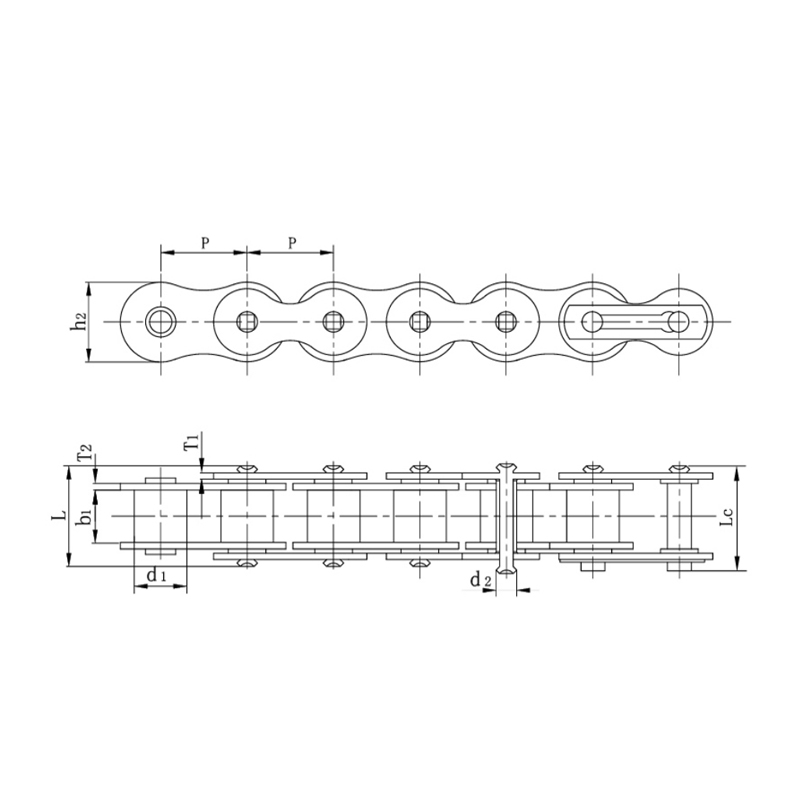 X-ring motorcycle chains Suppliers, FactoryHangzhou Qianjiang Chain Industries Co., Ltd is China wholesale X-ring motorcycle chains Suppliers and top Factory,Product Introduction: ...View Product →
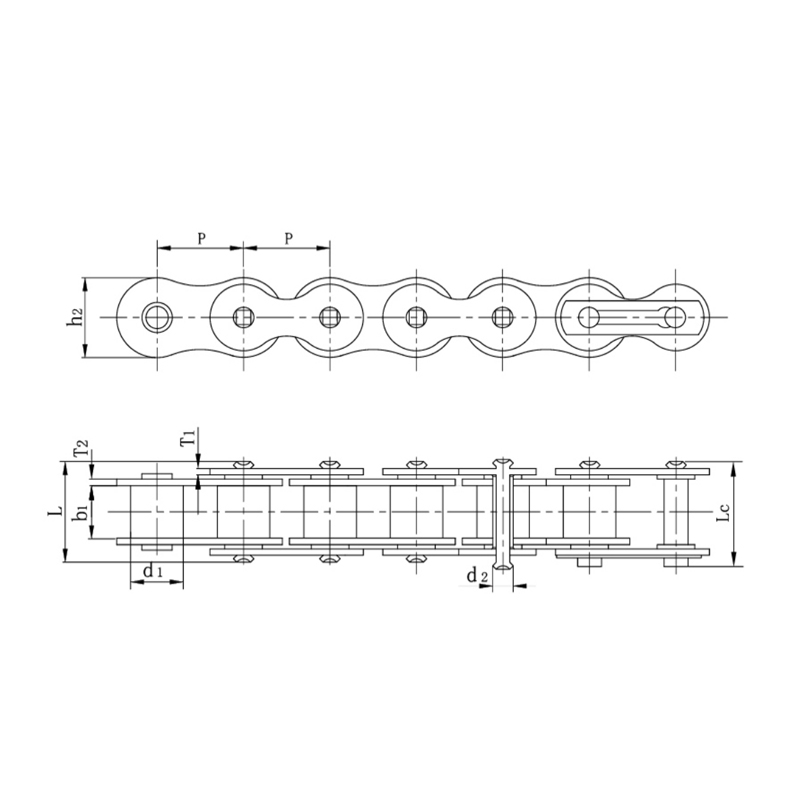 O-ring motorcycle chains Suppliers, FactoryHangzhou Qianjiang Chain Industries Co., Ltd is China wholesale O-ring motorcycle chains Suppliers and top Factory,Product Introduction: ...View Product →
Industrial equipment follows the same logic. Conveyors in cement plants, quarry machinery, agricultural harvesters, and packaging lines running in dusty or damp environments see the greatest benefit from sealed construction. A sealed chain for mechanical transmission keeps maintenance intervals predictable and protects the drive from contamination-driven wear.
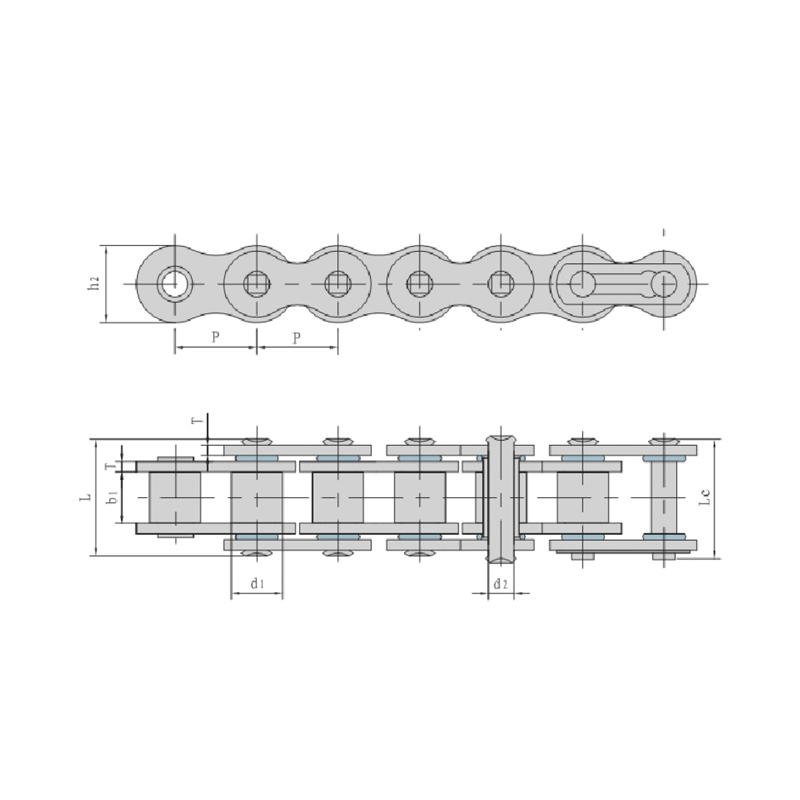 Mechanical transmission sealed chains Suppliers, FactoryHangzhou Qianjiang Chain Industries Co., Ltd is China wholesale Mechanical transmission sealed chains Suppliers and top Factory,Product I...View Product →
Agricultural machinery deserves a special mention. A roller chain in a combine or baler faces chaff, dust, and unpredictable weather. An oil seal chain resists corrosion and retains its grease far more effectively in those conditions, which is why equipment manufacturers now specify sealed chains instead of leaving them as a dealer-installed upgrade. The same reasoning applies to automatic parking systems and door operators, where a sealed chain avoids repeated lubrication of hard-to-reach mechanisms over the life of the installation.
What to Check Before You Buy
Before selecting a sealed chain, verify the following:
- Pitch and size: match the chain number to the application. 420, 428, 520, 525, 530, and 630 are common motorcycle sizes, while 08B, 10B, 12B, 16B, and A-series equivalents cover most industrial drives. Confirm roller width and pin diameter against the sprockets.
- Tensile strength: compare minimum ultimate tensile load values, not just the chain number printed on the box.
- Seal seating: check the ring position on a sample link. A consistent, flush seal indicates controlled assembly.
- Sprocket condition: worn or hooked sprocket teeth accelerate seal wear, so replace sprockets together with the chain.
- Manufacturer credibility: a sealed chain is only as good as the factory that produced it. Look for established makers with test equipment and formal product assessments.
One practical example is the 420VO-X high-strength motorcycle oil seal chain produced by Qianjiang Chain, which passed a provincial-level new product appraisal. Independent evaluation of that kind is uncommon for chain products and indicates a manufacturer that treats sealed-chain engineering as a core capability.
Keeping an Oil Seal Chain in Good Condition
The first maintenance rule for a sealed chain is to avoid soaking it in kerosene or any aggressive solvent. Solvent can creep past the seals, dilute the factory grease, and leave the pin and bushing dry. That is the most common cause of premature failure in oil seal chains.
- Wipe the chain with a clean cloth after each ride or work shift to remove surface dirt.
- Clean the sprockets with a brush and a mild degreasing spray, keeping solvent away from the seals.
- Apply a lubricant designed for sealed chains, then let it soak in briefly.
- Check and adjust tension with the wheel on the ground or the axle in its normal running position.
- Replace the chain once elongation passes the manufacturer's limit, usually 2 to 3 percent.
An oil seal chain is not maintenance-free; it simply asks for less frequent and less invasive care than a standard chain. Follow these routines and the sealed chain will outlast a standard chain by a wide margin in most applications.
Oil seal chains do not solve every chain problem, but they address the most common failure mode: wear driven by lost lubrication and incoming contamination. Choose the right size, seal type, and manufacturer, and the payoff shows up in longer service intervals, reduced sprocket wear, and lower total cost over the life of the machine. If your equipment runs dusty, wet, or simply out of reach for routine lubrication, a sealed chain is no longer a premium option; it is the sensible baseline.
News
-
I. Introduction Conveyor systems form the backbone of modern industrial automation, enabling the eff...
READ MORE -
1. Introduction 1.1 Definition and Basic Concept of Coupling Chains Coupling chains are mechanical d...
READ MORE -
1. Introduction to Leaf Chains Leaf chains are a type of mechanical chain used in a variety of indus...
READ MORE

 +86-13805752016
 +86-571-82875104/82875108
 [email protected]
 No. 80 QianNong West Road, Xiaoshan District, Hangzhou City, Zhejiang Province,China
Copyright © Hangzhou Qianjiang Chain Industries Co., Ltd. All Rights Reserved.
|
 浙公网安备33010902004043号