
 Eng
Eng  中文简体
中文简体Home / News / Industry News / Motorcycle Chain Basics: Sizes, Types, Sealed vs. Standard, and Selection
Submit feedback
Motorcycle Chain Basics: Sizes, Types, Sealed vs. Standard, and Selection
Update:17-09-2026
Posted by Admin
Content
- 1 When the Chain Lets Go, the Warning Signs Came First
- 2 Decoding the Numbers: What 520, 525, and 530 Really Mean
- 3 Standard, O-Ring, and X-Ring: What the Seal Actually Changes
- 4 Choosing a Chain for the Way You Ride
- 5 Installation, Adjustment, and the Wear Signs That Mean Replacement
- 6 Why the Manufacturer Matters as Much as the Part Number
When the Chain Lets Go, the Warning Signs Came First
Picture this: you are rolling toward a corner and the drive suddenly goes slack. The engine revs, the rear wheel loses drive, and when you pull over you find the chain hanging loose under the swingarm, or off the sprockets completely. By the time a motorcycle chain fails that dramatically, the warnings were already present: a chain that needed adjustment far too often, links that would not flex freely, or sprocket teeth worn into hook shapes.
The replacement decision becomes simple once you understand three things: what the size code means, how the seal type changes performance and maintenance, and what your riding actually demands. Get these three decisions right and a new chain can deliver tens of thousands of kilometres of reliable service. Get the size wrong, and even an expensive chain can wear quickly or fail at the worst possible moment.
Decoding the Numbers: What 520, 525, and 530 Really Mean
Motorcycle chains carry a standardized size code in which every digit means something. The first digit represents pitch in eighths of an inch; the digits that follow represent the inner width between the side plates, also in eighths of an inch. A 420 chain, for example, has a 4/8-inch pitch of 12.7 mm and a width of 2/8 inch, or 6.35 mm. A 520, 525, or 530 chain all share a 5/8-inch pitch of 15.88 mm, but each has a different width: 1/4 inch, 5/16 inch, and 3/8 inch respectively.
Pitch and width define whether the chain fits your sprockets. The pitch must match exactly, and the inner width must suit the sprocket tooth thickness. A chain that is too narrow or too wide will ride incorrectly on the sprocket faces and fail early.
| Size code | Pitch | Inner width | Typical fit |
|---|---|---|---|
| 420 | 1/2 in (12.7 mm) | 1/4 in (6.35 mm) | Small-displacement bikes, scooters, mini bikes |
| 428 | 1/2 in (12.7 mm) | 5/16 in (7.94 mm) | Light commuters and entry-level off-road models |
| 520 | 5/8 in (15.88 mm) | 1/4 in (6.35 mm) | Middleweight sport bikes and standard motorcycles |
| 525 | 5/8 in (15.88 mm) | 5/16 in (7.94 mm) | Street and sport-touring motorcycles |
| 530 | 5/8 in (15.88 mm) | 3/8 in (9.53 mm) | Large-displacement, cruiser, and heavy off-road motorcycles |
On road bikes, the 520 and 530 families dominate. A 520 chain is lighter and creates slightly less drag, which is why sport bikes and lighter standards use it. A 530 chain is wider, heavier, and stronger, which is why big cruisers, tourers, and heavy off-road machines are built around it. The 525 is the compromise many manufacturers choose when they want a bit more strength than a 520 without the full mass of a 530.
Standard, O-Ring, and X-Ring: What the Seal Actually Changes
Within the same size, the biggest difference between chains is the seal between the inner and outer links. It decides how long the internal grease lasts and how quickly dirt gets into the bearing surfaces.
Standard chains
An unsealed, or standard, chain has no rubber rings between the plates. The limited amount of factory grease is meant to be supplemented with regular external lubrication, but nothing prevents water and abrasive dust from entering. The result is a chain that is light, inexpensive, and honest about its weakness: it needs frequent cleaning, lubrication, and adjustment. If you are comparing prices, a standard motorcycle chain is the lowest-cost option, but the long-term cost depends entirely on how consistently you maintain it.
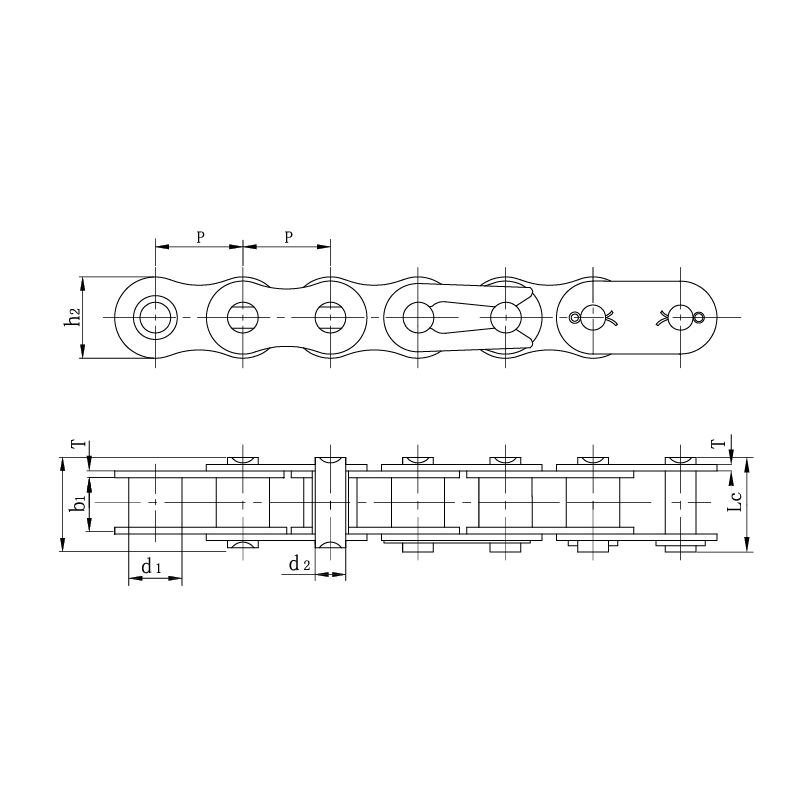 Motorcycle standard chains Suppliers, FactoryHangzhou Qianjiang Chain Industries Co., Ltd is China wholesale Motorcycle standard chains Suppliers and top Factory,Product Introduction...View Product →
O-ring chains
An O-ring chain places a small elastomer ring between the inner and outer plates on each pin. The ring seals factory grease around the pin and bushing and keeps dirt out. That single change is why O-ring motorcycle chains can last several times longer than standard chains on the street. They are the default choice for almost every road motorcycle today, and the higher purchase price is recovered through longer mileage between replacements.
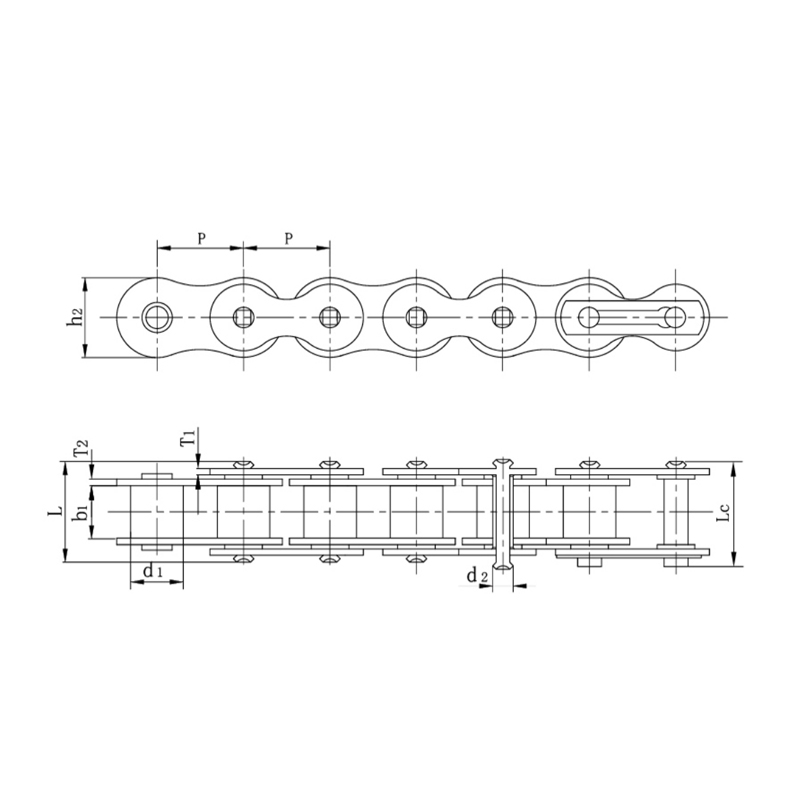 O-ring motorcycle chains Suppliers, FactoryHangzhou Qianjiang Chain Industries Co., Ltd is China wholesale O-ring motorcycle chains Suppliers and top Factory,Product Introduction: ...View Product →
X-ring chains
An X-ring chain uses a ring with an X-shaped cross-section, which forms two sealing lips instead of one. Lubricant stays in, contamination stays out, and the smaller contact area reduces joint friction. It is the preferred construction for off-road and adventure riding, where mud, sand, and rain are routine. Because the seals cost more to make, an X-ring motorcycle chain usually sits at the top of the price range, with slightly more weight as the only real trade-off.
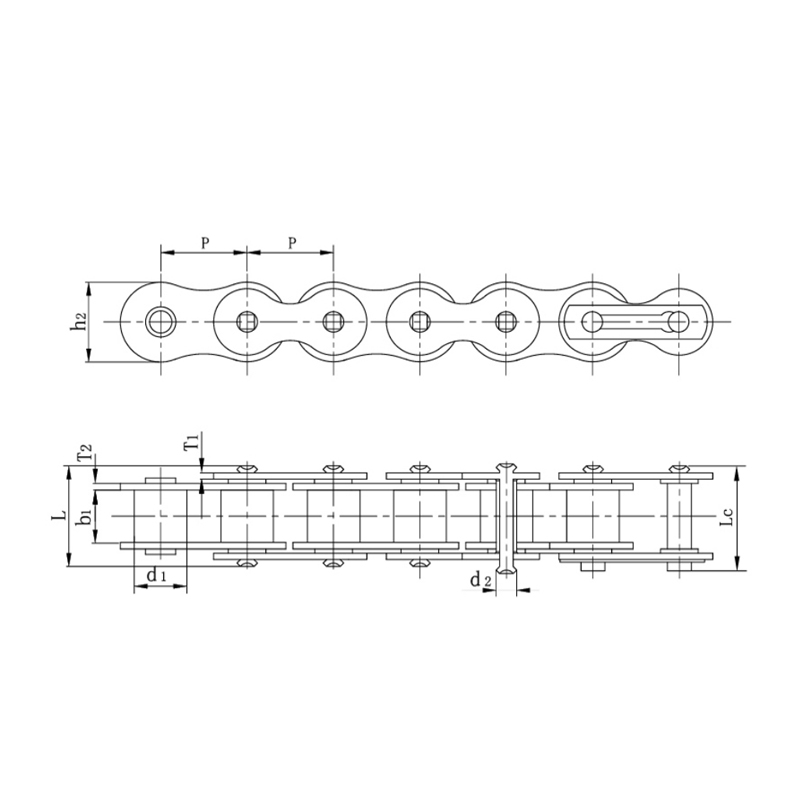 X-ring motorcycle chains Suppliers, FactoryHangzhou Qianjiang Chain Industries Co., Ltd is China wholesale X-ring motorcycle chains Suppliers and top Factory,Product Introduction: ...View Product →
Choosing a Chain for the Way You Ride
The right choice depends on duty cycle, not just the bike model. These recommendations are a starting point; always confirm the size stamped on the old chain or listed in the owner's manual.
- Street commuting and general riding: a 520 or 525 O-ring chain offers the best balance. It holds adjustment longer, tolerates wet city conditions, and does not demand constant attention. For most riders, an O-ring style is the safest recommendation.
- Sport riding and track days: a 520 X-ring chain reduces unsprung mass compared with a 530, while an unsealed 520 remains a valid choice for owners who accept shorter service life in exchange for minimum drag and weight.
- Off-road and adventure: an X-ring chain in the factory-fitted 520 or 530 size is the most durable solution. Abrasive mud and dust punish unsealed chains quickly, which is where the extra seal pays for itself. Riders who spend serious time in the dirt will find the durability and maintenance considerations for X-ring sealed chains directly relevant.
- Cruisers, tourers, and heavy machines: a 530 sealed chain provides the tensile strength for high torque loads and the sealing needed for high-mileage road travel.
Chain and sprockets must always be replaced as a set. A new chain running on a hooked sprocket will wear out in a fraction of its normal life. If you are changing gearing at the same time, the pitch stays the same but the link count and required slack can change, so count the links carefully when fitting.
For a broader look at how chain types, sprocket wear, and replacement habits interact, the complete motorcycle chain guide covering types, maintenance, and replacement is worth reading before you order parts.
Installation, Adjustment, and the Wear Signs That Mean Replacement
Getting the fit right
Fit the chain and sprockets as a set, then check the wheel alignment marks on the swingarm before adjusting tension. Most road motorcycles specify roughly 25 to 35 mm of free play at the midpoint of the lower chain run. A chain that is too tight loads the gearbox output shaft and wheel bearings; a chain that is too loose can jump sprockets on rough surfaces. Follow the installation precautions for motorcycle chains published for your bike, and pay special attention to the master link: riveted too hard, it binds; riveted too lightly, it can separate.
Wear signs that mean replacement
As pins and bushings wear, the chain effectively gets longer. Measure elongation over a fixed number of links, and replace the chain when it reaches roughly 2 to 3 percent stretch. Two other signs are equally reliable: kinked links that will not flex freely, and sprocket teeth worn into hook shapes. If any of these appear, do not postpone the replacement. Lubricate the chain with a product designed for motorcycle chains rather than a general-purpose spray; the correct viscosity and carrier make a measurable difference in bushing life.
Why the Manufacturer Matters as Much as the Part Number
Chains with the same size code are not the same product. The difference is in the details: the steel grade used for pins and side plates, the depth and consistency of heat treatment, the accuracy of rollers and bushings, and the quality of the rubber seals and assembly. A chain built under controlled processes can last two or three times as long as a cut-price equivalent running on the same bike.
Hangzhou Qianjiang Chain Industries Co., Ltd. has manufactured chains since 1987 and supplies the motorcycle segment with standard chains, heavy-duty motorcycle chains, engine timing chains, and O-ring and X-ring sealed chains. Its 420VO-X high-strength motorcycle oil-seal chain has passed a provincial-level new product appraisal, and the company reports that production is managed with an ERP system and automated visual inspection for 100 percent parts inspection. Those are the details worth asking about when you compare suppliers.
When you evaluate quotes, ask about heat treatment, testing, and quality control rather than only looking at price. The chain is the final component between the engine and the road; the cheapest option in the catalog is often the most expensive chain to own.
News
-
I. Introduction Conveyor systems form the backbone of modern industrial automation, enabling the eff...
READ MORE -
1. Introduction 1.1 Definition and Basic Concept of Coupling Chains Coupling chains are mechanical d...
READ MORE -
1. Introduction to Leaf Chains Leaf chains are a type of mechanical chain used in a variety of indus...
READ MORE

 +86-13805752016
 +86-571-82875104/82875108
 [email protected]
 No. 80 QianNong West Road, Xiaoshan District, Hangzhou City, Zhejiang Province,China
Copyright © Hangzhou Qianjiang Chain Industries Co., Ltd. All Rights Reserved.
|
 浙公网安备33010902004043号