
 Eng
Eng  中文简体
中文简体Submit feedback
Leaf Chains: The Ultimate Guide to Types, Selection, and Maintenance
Update:29-05-2026
Posted by Admin
Content
- 1 Are Leaf Chains the Right Choice for Your Heavy-Duty Lifting Applications?
- 2 What Is a Leaf Chain?
- 3 Key Standards and Series
- 4 Types of Leaf Chain Lacing Patterns
- 5 How to Select the Right Leaf Chain
- 6 Installation Best Practices
- 7 Lubrication and Ongoing Maintenance
- 8 When to Replace a Leaf Chain
- 9 Common Industries and Applications
- 10 Final Thoughts on Leaf Chain Performance
Are Leaf Chains the Right Choice for Your Heavy-Duty Lifting Applications?
When it comes to lifting and load-bearing applications in industrial environments, the choice of chain can make the difference between safe, efficient operation and costly mechanical failure. Leaf chains are one of the most trusted components in forklifts, hoists, and hydraulic cylinder balancing systems worldwide. But what exactly makes a leaf chain different from other chain types, and how do you choose, install, and maintain one correctly? This comprehensive guide answers all of those questions and more.
What Is a Leaf Chain?
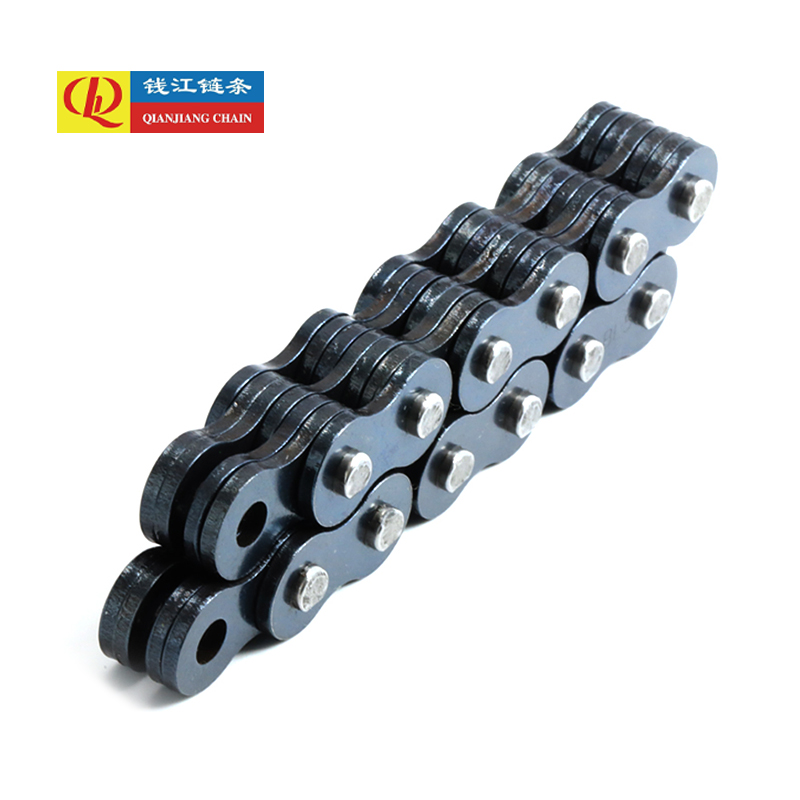
A leaf chain is a type of mechanical chain composed entirely of interlaced link plates (also called leaves) and pins, without any rollers. Unlike roller chains, which are designed primarily for power transmission via sprockets, leaf chains are engineered specifically for tension and lifting applications. Their construction allows them to carry very high tensile loads relative to their size and weight, making them ideal for counterbalancing and lifting in material handling equipment.
The link plates are stacked in specific lacing patterns on either side of the connecting pins. The more plates stacked, the higher the breaking load the chain can sustain. This straightforward but robust design has made leaf chains a standard component in forklift masts, crane counterweights, and machine tool balancing systems for decades.
Key Standards and Series
Leaf chains are manufactured according to several international standards, most notably the American National Standards Institute (ANSI) and the International Organization for Standardization (ISO). The two primary series are:
- AL Series (ANSI Lacing): Also known as the BL series in some markets, these chains follow ANSI B29.8 standards. They are the most widely used in North America and are manufactured in lacing configurations from 2×2 up to 8×8, indicating the number of link plates on each side of the pin.
- LH Series (ISO Lacing): These follow ISO 4347 standards and are the preferred choice in European and Asian markets. The LH series uses a similar lacing configuration but may differ slightly in dimensional tolerances and surface finish requirements.
Understanding which standard applies to your equipment is critical. Mixing components from different standards can result in dimensional mismatches, uneven load distribution, and premature chain failure.
Types of Leaf Chain Lacing Patterns
The lacing pattern of a leaf chain directly affects its tensile strength, flexibility, and fatigue resistance. Below is a summary of the most common configurations and their typical applications:
| Lacing Type | Plate Configuration | Typical Use |
| 2×2 | 2 inner, 2 outer | Light-duty hoists |
| 4×4 | 4 inner, 4 outer | Standard forklift masts |
| 6×6 | 6 inner, 6 outer | Heavy-duty lifting systems |
| 8×8 | 8 inner, 8 outer | Crane counterbalancing, extreme loads |
Choosing the correct lacing pattern is not purely about maximizing strength. Over-specifying a chain for a light-duty application adds unnecessary weight and cost, while under-specifying risks catastrophic failure. Always refer to the manufacturer's load rating charts and apply an appropriate safety factor — typically a minimum of 5:1 for lifting applications.
How to Select the Right Leaf Chain
Selecting the appropriate leaf chain for your application involves several important parameters. Rushing through this process or relying on guesswork can lead to equipment damage or serious safety incidents.
Working Load Limit (WLL)
The working load limit is the maximum load a chain is rated to carry under normal operating conditions. This figure is derived from the chain's minimum breaking load (MBL) divided by the safety factor. Always verify that your selected chain's WLL exceeds the maximum expected load in your application, including dynamic forces such as acceleration, shock loads, and vibration.
Pitch Size
Pitch refers to the distance between the centers of adjacent pins. Common pitch sizes for leaf chains range from 0.5 inches to 2 inches or more. The pitch must match the sheave or pulley diameter in the system. Using an incorrect pitch will cause the chain to skip, wear unevenly, or jam entirely.
Material and Surface Treatment
Most standard leaf chains are manufactured from carbon steel and then heat-treated for hardness and wear resistance. For applications involving moisture, chemicals, or food-grade environments, stainless steel leaf chains or chains with specialized coatings such as nickel plating or zinc plating are available. These variants offer improved corrosion resistance at a higher cost.
Installation Best Practices
Correct installation is just as important as selecting the right chain. Even a high-quality leaf chain will fail prematurely if installed improperly. Follow these guidelines to ensure a safe and long-lasting installation:
- Always inspect the anchor pins, sheaves, and mounting hardware before installing a new chain. Worn components will accelerate chain wear even on a new installation.
- Ensure the chain is correctly aligned with the sheave or pulley. Misalignment creates lateral stress on the link plates and pins, which dramatically reduces fatigue life.
- Apply the manufacturer-recommended lubricant to the chain before initial use. Dry-running a leaf chain causes immediate wear and can void warranty coverage.
- When cutting a leaf chain to length, use a proper chain-cutting tool. Grinding or sawing can introduce heat stress or burrs that compromise the chain's structural integrity.
- After installation, perform a slow-cycle test under controlled load conditions before returning the equipment to full operational use. This allows you to identify any misalignment, unusual noise, or binding before a heavy load is applied.
Lubrication and Ongoing Maintenance
Lubrication is the single most important factor in determining the service life of a leaf chain. The primary wear mechanism in a leaf chain is pin-to-plate interface wear, which occurs when the chain flexes under load. Adequate lubrication reduces metal-to-metal contact at this interface, significantly extending chain life.
The most effective lubrication method depends on the application environment. For indoor forklift operations with moderate duty cycles, manual brush or drip lubrication applied during scheduled maintenance intervals is typically sufficient. In high-cycle or outdoor environments, automatic chain lubrication systems that deliver precise quantities of oil at regular intervals are more effective and cost-efficient in the long run.
Use only chain oils specifically formulated for leaf or roller chains. Do not use grease, motor oil, or general-purpose lubricants as a substitute — these may not penetrate the tight clearances between link plates and can trap dirt and abrasive particles, accelerating wear rather than reducing it.
When to Replace a Leaf Chain
Knowing when to replace a leaf chain is essential for maintaining safe operations. Unlike roller chains used for power transmission, leaf chains can be difficult to visually assess for fatigue damage. The following indicators should trigger immediate chain replacement:
- Elongation beyond 3%: Leaf chains elongate as pins and plates wear. Once elongation reaches 3% of the nominal chain length (measurable with a chain wear gauge), the chain must be replaced regardless of its apparent visual condition.
- Visible cracks or plate deformation: Any cracked, bent, or visibly deformed link plates indicate fatigue damage that can result in sudden failure under load.
- Pin rotation or protrusion: Pins that have rotated or are protruding from the link plates indicate that the chain is operating under excessive lateral stress or is near the end of its service life.
- Corrosion pitting: Surface corrosion on link plates reduces the load-bearing cross-section and promotes stress cracking. Heavily corroded chains should always be replaced, not cleaned and returned to service.
Many forklift manufacturers specify a mandatory leaf chain replacement interval, typically every 2,000 to 3,000 operating hours or every two years, whichever comes first. Always follow OEM guidelines alongside the inspection criteria above.
Common Industries and Applications
Leaf chains are found across a broad range of industries wherever controlled lifting or tensioning is required. Some of the most common applications include:
- Forklift and pallet truck masts: The largest single-use category for leaf chains globally. The chains are used to raise and lower the fork carriage through a system of sheaves and hydraulic cylinders.
- Hydraulic cylinder balancing: In construction machinery and industrial presses, leaf chains balance the weight of the cylinder rod assembly to reduce hydraulic load and improve positional accuracy.
- Machine tool counterweights: CNC machining centers and vertical lathes use leaf chains to counterbalance heavy spindle heads, enabling precise, low-force vertical movement.
- Crane and hoist systems: In smaller overhead cranes and shop hoists, leaf chains provide a compact and high-strength alternative to wire rope.
Final Thoughts on Leaf Chain Performance
Leaf chains are deceptively simple components that play a critical role in the safety and efficiency of lifting equipment worldwide. Their performance depends not only on manufacturing quality but also on correct selection, proper installation, and a disciplined maintenance program. By understanding the different series, lacing configurations, and wear indicators described in this guide, maintenance professionals and equipment designers can make informed decisions that extend service life, reduce downtime, and most importantly, protect the people working around these machines every day.
News
-
I. Introduction Conveyor systems form the backbone of modern industrial automation, enabling the eff...
READ MORE -
1. Introduction 1.1 Definition and Basic Concept of Coupling Chains Coupling chains are mechanical d...
READ MORE -
1. Introduction to Leaf Chains Leaf chains are a type of mechanical chain used in a variety of indus...
READ MORE

 +86-13805752016
 +86-571-82875104/82875108
 [email protected]
 No. 80 QianNong West Road, Xiaoshan District, Hangzhou City, Zhejiang Province,China
Copyright © Hangzhou Qianjiang Chain Industries Co., Ltd. All Rights Reserved.
|
 浙公网安备33010902004043号