
 Eng
Eng  中文简体
中文简体Home / News / Industry News / Industrial Applications of Roller Chains in Conveyors and Power Transmission
Submit feedback
Industrial Applications of Roller Chains in Conveyors and Power Transmission
Update:26-12-2025
Posted by Admin
Content
Introduction to Roller Chains in Industry
Roller chains are essential components in industrial machinery, widely used for power transmission and conveyor systems. Their robust design, high efficiency, and ability to handle heavy loads make them indispensable in manufacturing, material handling, and automotive sectors. Understanding their applications and benefits helps industries select the right chains for optimal performance and durability.
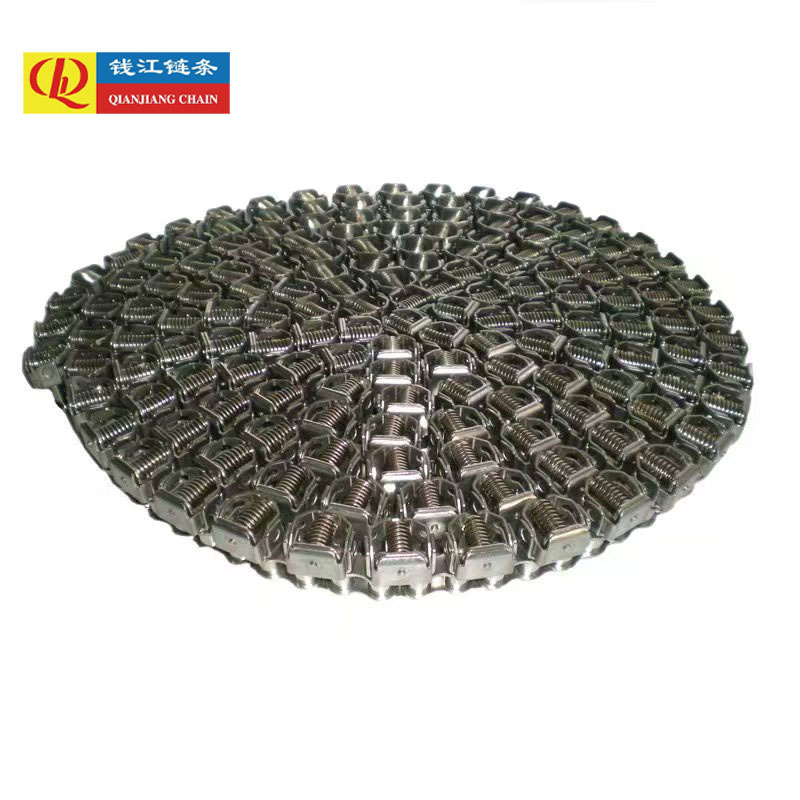
Roller Chains in Conveyor Systems
Conveyor systems rely heavily on roller chains to transport materials efficiently across production lines. Roller chains provide precise movement, high tensile strength, and long-lasting performance, making them ideal for continuous operations. They can operate in harsh environments, including high temperatures, dusty or wet conditions, and heavy load scenarios.
Applications in Material Handling
- Automotive assembly lines for moving car parts between workstations.
- Food and beverage production for transporting bottles, cans, and packaging.
- Warehousing and logistics for handling pallets and bulk goods.
- Mining and quarrying to convey heavy raw materials over long distances.
Advantages in Conveyor Systems
- High load-bearing capacity and tensile strength.
- Durable under continuous operation with minimal stretching.
- Adaptable to various conveyor designs including horizontal, inclined, and vertical systems.
- Resistant to wear and corrosion when made of stainless steel or treated alloys.
Roller Chains in Power Transmission
In power transmission, roller chains transfer mechanical energy from motors or engines to machinery components. They are preferred for high torque applications where efficiency and reliability are critical. Industries such as agriculture, packaging, and industrial automation frequently employ roller chains to ensure smooth, uninterrupted operation.
Key Power Transmission Applications
- Driving conveyor belts and assembly lines in manufacturing plants.
- Power transmission in agricultural machinery like harvesters and tractors.
- Industrial compressors and pumps requiring precise mechanical synchronization.
- Automotive timing and camshaft drive systems in engines.
Benefits in Power Transmission
- Efficient transmission of mechanical power over long distances.
- Ability to handle high torque without slippage.
- Durable and resistant to fatigue under repeated stress cycles.
- Easy to replace or maintain without significant downtime.
Material and Design Considerations
Selecting the appropriate roller chain material and design is crucial for performance and longevity. Standard roller chains are made from carbon steel, while high-performance or corrosion-resistant chains use stainless steel or alloy steels. Proper lubrication and tensioning further enhance durability and reduce maintenance needs.
| Chain Type | Common Uses | Advantages |
|---|---|---|
| Standard Roller Chain | General machinery, conveyors, light power transmission | Cost-effective, reliable, easy to maintain |
| Heavy-Duty Roller Chain | Industrial conveyors, mining equipment, large machinery | High tensile strength, durable under heavy loads |
| Stainless Steel Roller Chain | Food, beverage, chemical, and outdoor machinery | Corrosion-resistant, hygienic, long service life |
Conclusion
Roller chains play a vital role in industrial conveyors and power transmission systems. Their strength, durability, and versatility make them suitable for a wide range of applications, from manufacturing and material handling to automotive and agricultural machinery. Choosing the right chain type, material, and maintenance practices ensures optimal performance, extended service life, and reduced operational downtime.
News
-
I. Introduction Conveyor systems form the backbone of modern industrial automation, enabling the eff...
READ MORE -
1. Introduction 1.1 Definition and Basic Concept of Coupling Chains Coupling chains are mechanical d...
READ MORE -
1. Introduction to Leaf Chains Leaf chains are a type of mechanical chain used in a variety of indus...
READ MORE

 +86-13805752016
 +86-571-82875104/82875108
 [email protected]
 No. 80 QianNong West Road, Xiaoshan District, Hangzhou City, Zhejiang Province,China
Copyright © Hangzhou Qianjiang Chain Industries Co., Ltd. All Rights Reserved.
|
 浙公网安备33010902004043号