
 Eng
Eng  中文简体
中文简体Submit feedback
How Silent Chains Improve Flank Contact in Precision Drive Systems?
Update:14-05-2026
Posted by Admin
Content
- 1 What Makes Silent Chains Different From Conventional Drive Chains?
- 2 Understanding Flank Contact: The Core Mechanism
- 3 Why Flank Contact Makes Silent Chains Quieter
- 4 Industrial Applications Where Flank Contact Silent Chains Excel
- 5 Wear Patterns and Longevity Under Flank Contact Conditions
- 6 How to Select the Right Silent Chain for Your Flank Contact Requirements
- 7 Maintenance Practices That Protect Flank Contact Integrity
What Makes Silent Chains Different From Conventional Drive Chains?
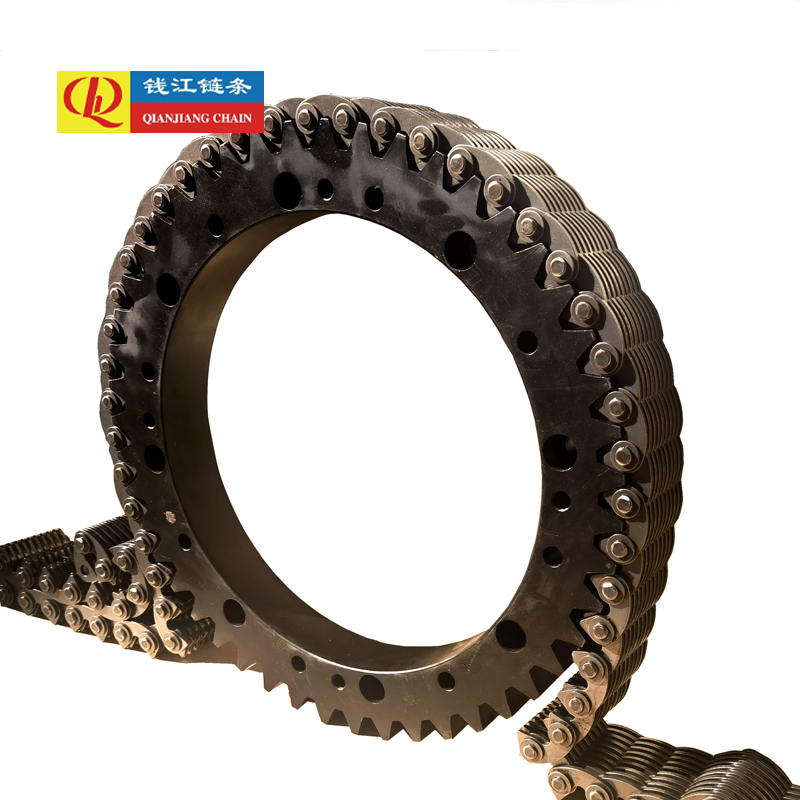
When engineers talk about power transmission, the word "silent" in silent chains is not just a marketing label — it describes a fundamentally different mechanical principle. Unlike roller chains, which transfer load through rollers contacting sprocket teeth at a single point, silent chains (also known as inverted tooth chains) engage sprocket teeth through direct flank contact. This means the chain links themselves press against the flanks of the sprocket teeth rather than resting on top of them. The result is a broader load-bearing surface, reduced impact at engagement, and a dramatically quieter operation under high-speed conditions.
Silent chains were first developed in the late 19th century and have since evolved into highly engineered components used in automotive timing systems, industrial gearboxes, and machine tools. Their design allows them to operate at higher speeds with less vibration than conventional chains, making them indispensable in environments where noise, precision, and durability are critical factors.
Understanding Flank Contact: The Core Mechanism
Flank contact refers to the way a chain link's tooth profile engages with the side face — or flank — of a sprocket tooth rather than its tip or root. In silent chains, the link plates are shaped with an inverted tooth profile that slides smoothly into mesh with the sprocket. The flanks of the chain links bear the transmitted load directly, spreading force across a larger surface area than a roller chain's point contact allows.
This mechanism has several important mechanical consequences. Because the engagement is gradual and the contact zone is distributed, shock loads are absorbed more evenly across multiple links simultaneously. This prevents the localized stress spikes that wear down rollers and bushings in conventional chains. Furthermore, the geometry of flank contact allows the chain to wrap more smoothly around the sprocket, which is why silent chains can operate reliably at pitch-line velocities exceeding 30 meters per second.
Key Geometric Factors That Influence Flank Contact Quality
- Tooth flank angle: The included angle between the chain link tooth and the sprocket tooth determines how smoothly engagement and disengagement occur.
- Pitch accuracy: Dimensional consistency across all link pitches ensures that load is shared equally among engaged links rather than concentrated on one or two.
- Surface finish: A finely finished flank surface reduces friction coefficients and slows wear, extending chain and sprocket life.
- Backlash control: Tight dimensional tolerances limit unwanted play between the chain and sprocket, improving positional accuracy in timing applications.
Why Flank Contact Makes Silent Chains Quieter
One of the most measurable advantages of flank contact in silent chains is noise reduction. Conventional roller chains generate noise primarily through the impact of rollers striking sprocket teeth at the moment of engagement. Each engagement event produces a sharp impulse that, multiplied across dozens of teeth per second at high operating speeds, creates a characteristic rattling or whirring noise.
Silent chains avoid this by replacing abrupt impact engagement with a sliding flank contact that is geometrically guided into position. The chain tooth flanks glide onto the sprocket flanks progressively, which distributes the engagement impulse over time and reduces its peak magnitude. Acoustic measurements in controlled test environments consistently show that silent chains produce 10 to 15 decibels less noise than equivalent roller chains at the same operating speed and load — a difference that is clearly perceptible to the human ear and significant in noise-sensitive industrial environments.
Industrial Applications Where Flank Contact Silent Chains Excel
The engineering properties of flank contact silent chains make them the preferred solution across a range of demanding applications. Their combination of high-speed capability, load distribution, and low noise output fills a gap that neither roller chains nor gear drives can easily address.
| Application | Why Silent Chain Is Used | Critical Performance Factor |
| Automotive Timing Systems | Precise valve timing, low NVH | Positional accuracy under thermal load |
| Industrial Gearboxes | High-speed torque transmission | Continuous load capacity |
| CNC Machine Tools | Minimal vibration for surface quality | Pitch consistency and stiffness |
| Textile Machinery | Quiet, high-cycle operation | Long service life at low lubrication |
| Printing Presses | Synchronization of multiple rollers | Phase stability at variable speeds |
Wear Patterns and Longevity Under Flank Contact Conditions
Understanding how silent chains wear over time helps engineers design maintenance schedules and predict replacement intervals. Because flank contact distributes load broadly, wear occurs gradually and uniformly rather than in concentrated hot spots. The primary wear modes in silent chains are abrasive flank wear, caused by micro-asperities grinding between the chain link and sprocket tooth surfaces, and fatigue wear, which develops over millions of load cycles in the link plate material itself.
Properly lubricated silent chains operating within their rated load and speed limits can achieve service lives of 15,000 to 25,000 operating hours in industrial settings. This compares favorably with roller chains in similar duty cycles. The key variables that govern silent chain life under flank contact conditions include:
- Lubrication film thickness: An adequate oil film between the flank contact surfaces prevents metal-to-metal contact and dramatically slows abrasive wear.
- Operating temperature: Elevated temperatures thin lubricant films and accelerate oxidative degradation of both the oil and the chain plate material.
- Contamination control: Abrasive particles in the lubricant act as cutting media on the flank contact surfaces, so sealed or filtered lubrication systems are preferred.
- Sprocket hardness: Sprocket tooth flanks should be harder than the chain link flanks to ensure that wear is preferentially concentrated in the more easily replaced chain rather than the sprocket.
How to Select the Right Silent Chain for Your Flank Contact Requirements
Selecting a silent chain involves matching the chain's mechanical parameters to the specific demands of the application. Because flank contact geometry is central to performance, engineers must consider both the chain's tooth profile and the sprocket's corresponding tooth form as a mated system rather than as independent components.
Chain Width and Plate Count
Silent chain width is determined by the number of link plates stacked side by side. More plates mean more flank contact area and higher load capacity. However, wider chains are heavier and require more precise alignment to prevent uneven load distribution across the plate stack. For high-torque, low-speed applications, wide multi-plate chains are appropriate. For high-speed, moderate-torque applications, narrower chains with fewer plates reduce centrifugal loads and improve dynamic balance.
Pitch Selection
Chain pitch — the distance between successive joint centers — directly affects the number of links in contact with the sprocket at any moment. Shorter pitches increase the number of engaged links, distributing flank contact load more finely and enabling smoother high-speed operation. Longer pitches allow for simpler, more robust construction suited to lower-speed, higher-load applications. A common engineering rule is to use the shortest pitch that provides adequate strength while keeping the sprocket diameter within packaging constraints.
Guide Link Configuration
Silent chains use guide links — wider plates positioned at the inner or outer edges of the chain — to keep the chain laterally aligned on the sprocket. The guide link design affects how the chain tracks under load and how well flank contact is maintained across the full width of the chain. Center-guide configurations are common in automotive timing applications, while side-guide designs are often used in industrial gearbox applications where the sprocket geometry allows for it.
Maintenance Practices That Protect Flank Contact Integrity
Maintaining the flank contact geometry of a silent chain system over its service life requires attention to several practical factors. Unlike belt drives, silent chains do not require periodic tensioning due to belt creep, but they do elongate slightly as flank wear accumulates over time. Monitoring chain elongation — typically using a simple span measurement compared to a new chain — is the primary maintenance indicator for silent chains.
Most manufacturers recommend replacing a silent chain when it has elongated by 1.5% to 2% of its nominal length, because beyond this point the pitch mismatch between the worn chain and the sprocket causes the chain to ride higher on the sprocket teeth, shifting load from the designed flank contact zone toward the tooth tips and roots. This accelerates wear exponentially and risks sudden chain failure. Replacing the sprockets at the same time as the chain is best practice, since worn sprocket flanks will rapidly deteriorate a new chain if reused.
Correct lubrication method is equally important. Drip oiling is adequate for low-speed applications, while splash lubrication or forced-pressure oil systems are necessary for chains running above 8 to 10 meters per second. The lubricant must be delivered directly to the chain-sprocket mesh zone so it can penetrate between the link plates and reach the flank contact surfaces where it is needed most. Using the wrong viscosity or an insufficient flow rate will cause premature flank wear regardless of chain quality.
News
-
I. Introduction Conveyor systems form the backbone of modern industrial automation, enabling the eff...
READ MORE -
1. Introduction 1.1 Definition and Basic Concept of Coupling Chains Coupling chains are mechanical d...
READ MORE -
1. Introduction to Leaf Chains Leaf chains are a type of mechanical chain used in a variety of indus...
READ MORE

 +86-13805752016
 +86-571-82875104/82875108
 [email protected]
 No. 80 QianNong West Road, Xiaoshan District, Hangzhou City, Zhejiang Province,China
Copyright © Hangzhou Qianjiang Chain Industries Co., Ltd. All Rights Reserved.
|
 浙公网安备33010902004043号