
 Eng
Eng  中文简体
中文简体Submit feedback
How Do You Choose, Maintain, and Extend the Life of Roller Chains?
Update:12-06-2026
Posted by Admin
Content
- 1 How Roller Chains Work and Why the Design Matters
- 2 Standard Roller Chain Series and What the Numbers Mean
- 3 Selecting the Right Roller Chain for Your Application
- 4 Lubrication: The Single Biggest Factor in Chain Longevity
- 5 Measuring Wear and Knowing When to Replace a Roller Chain
- 6 Specialty Roller Chain Variants for Demanding Environments
How Roller Chains Work and Why the Design Matters
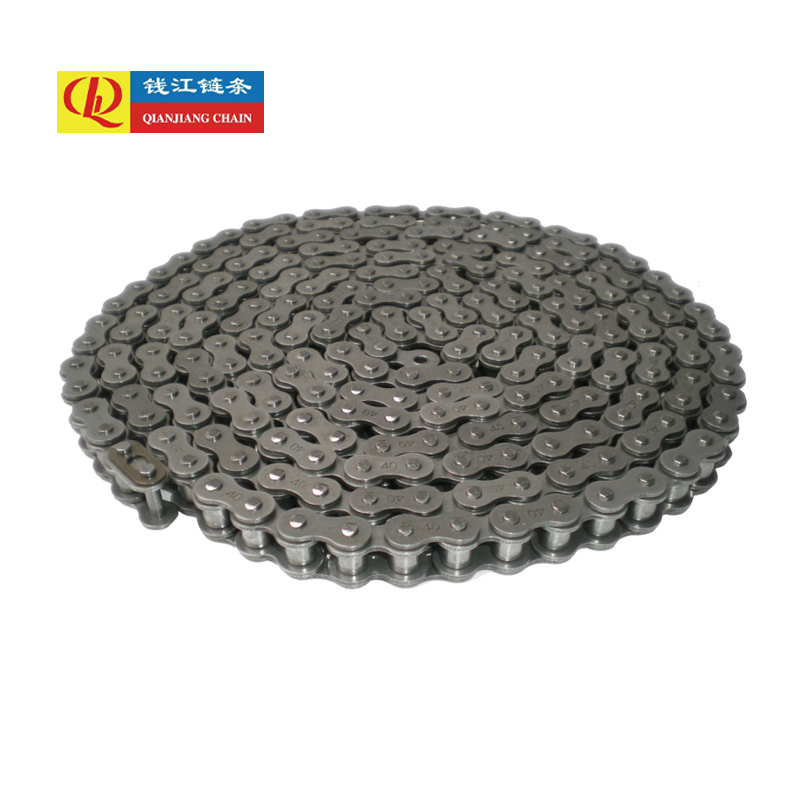
A roller chain transmits mechanical power between two sprockets by engaging a series of linked plates, pins, bushings, and rollers in a repeating loop. When a driving sprocket rotates, its teeth engage the rollers seated between the inner link plates, pulling the chain forward and transferring torque to the driven sprocket. The roller is the element that makes this design efficient: it rotates freely on the bushing as it seats into the sprocket tooth, converting what would otherwise be sliding friction into rolling contact. This seemingly simple mechanism underpins an enormous range of machinery — from bicycle drivetrains and agricultural equipment to conveyor systems, printing presses, and industrial gearboxes.
Understanding the anatomy of a roller chain helps when specifying or troubleshooting one. The inner link consists of two inner plates pressed onto a bushing, with the roller sitting around the bushing. The outer link — sometimes called the pin link — connects two inner links through two outer plates and a press-fitted pin running through both bushings. The clearance between the pin and the bushing determines how freely the chain articulates, and the hardness of these components directly affects wear life under load. High-quality chains use case-hardened pins and bushings with a tough, wear-resistant surface over a tough core that resists impact without becoming brittle.
Standard Roller Chain Series and What the Numbers Mean
Roller chains are manufactured to internationally recognized standards, primarily ANSI/ASME B29.1 in North America and ISO 606 in Europe and most of the rest of the world. These standards define the pitch — the center-to-center distance between consecutive pins — along with roller diameter, inner width, plate thickness, and minimum tensile strength. The ANSI designation uses a two- or three-digit number where the first digits indicate pitch in eighths of an inch and the last digit indicates the chain type: 0 for standard, 1 for lightweight, and 5 for rollerless bushing chain.
| ANSI Chain No. | Pitch (inches) | ISO Equivalent | Typical Use Case |
| #25 | 1/4" | 04B | Light instruments, small appliances |
| #40 | 1/2" | 08A | Motorcycles, light conveyors |
| #50 | 5/8" | 10A | Machine tools, medium drives |
| #60 | 3/4" | 12A | Agricultural equipment, heavy drives |
| #80 | 1" | 16A | Industrial conveyors, heavy machinery |
Double-strand and multiple-strand chains carry the suffix "-2" or "-3" after the chain number (e.g., 60-2 for a double-strand #60 chain). These configurations multiply the load capacity without increasing the pitch, which is useful when a larger pitch chain would run too slowly or create excessive sprocket tooth stress at the required speed.
Selecting the Right Roller Chain for Your Application
Chain selection begins with the power transmission requirement, but reducing it to a simple horsepower figure misses several factors that determine whether a given chain will provide acceptable service life. The following parameters must all be evaluated together before settling on a chain specification.
Design Power and Service Factor
The rated horsepower of a motor is not the figure used for chain selection. Instead, engineers calculate design power by multiplying the transmitted power by a service factor that accounts for the nature of the load. Smooth, uniform loads from electric motors typically use a service factor of 1.0. Moderate shock loads — such as those from reciprocating compressors or conveyors with irregular loading — require a factor of 1.3 to 1.5. Heavy shock loads from crushers, shredders, or hammermills may demand a service factor of 1.7 or higher. This adjusted design power figure is then cross-referenced against the chain manufacturer's power rating tables, which specify maximum permissible horsepower for each chain size at a given sprocket speed in RPM.
Sprocket Size and Speed Ratio
The number of teeth on the small sprocket — always the more critically loaded of the two — directly affects chain life. A minimum of 17 teeth on the small sprocket is a widely used guideline for drives requiring long service life, because fewer teeth cause the chain to articulate through a sharper angle with each engagement, accelerating pin and bushing wear. Very large speed ratios (above 7:1) are generally best handled in two stages using an intermediate shaft rather than a single-stage roller chain drive, both for efficiency reasons and to keep the large sprocket to a manageable diameter.
Centre Distance and Chain Length
The ideal centre distance between the driving and driven sprockets is 30 to 50 times the chain pitch. Too short a centre distance reduces the arc of wrap on the small sprocket and causes each link to articulate more frequently, while too long a centre distance introduces sag and vibration. Chain length is calculated in links rather than in linear units, and the total must be an even number to allow the use of a standard connecting link. Adjustable take-up devices or idler sprockets are used to maintain proper chain tension as the chain elongates through normal wear over its service life.
Lubrication: The Single Biggest Factor in Chain Longevity
No other maintenance practice has a greater effect on roller chain service life than correct lubrication. The primary wear mechanism in a roller chain is the gradual erosion of the pin and bushing contact surfaces, which causes the pitch to increase — what is commonly called chain stretch, although the steel plates themselves are not actually stretching. Lubricant penetrates the pin-bushing clearance, forms a hydrodynamic film under load, and carries away the heat generated by articulation. Without adequate lubrication, a chain operating under moderate industrial loads may wear out in a fraction of the time it would last with proper oiling.
Chain manufacturers specify lubrication methods by application type. There are four standard categories used across the industry:
- Type A — Manual or drip lubrication: applied periodically with an oil can or brush, or delivered by a drip oiler at a rate of one drop every five to twenty chain links per minute. Suitable for low-speed, lightly loaded drives.
- Type B — Bath or disc lubrication: the lower strand of the chain runs through an oil bath in a sealed housing, or a disc attached to the sprocket shaft picks up oil and flings it onto the chain. Used for moderate speeds up to around 600 RPM on the small sprocket.
- Type C — Oil stream lubrication: a continuous stream of oil is directed onto the chain from a pump-fed nozzle positioned at the inside of the lower chain strand near the driving sprocket. Required for high-speed drives above 1,500 RPM.
- Sealed and pre-lubricated chains: chains with O-ring or X-ring seals retain grease packed between the pin and bushing at manufacture. These are used where external contamination is severe or where re-lubrication is impractical, such as in outdoor agricultural and construction equipment.
The recommended lubricant for most industrial roller chain applications is a non-detergent mineral oil with a viscosity of SAE 20 to SAE 50 depending on ambient temperature. Grease should generally be avoided for in-service lubrication because it does not penetrate the pin-bushing clearance effectively; it fills the gap between outer plates and inner plates but leaves the critical wear surfaces insufficiently protected.
Measuring Wear and Knowing When to Replace a Roller Chain
A roller chain should be replaced before it has elongated by more than 3% of its nominal length, or 2% for precision drives and applications where sprocket tooth geometry is critical. Waiting until the chain is visibly slack or skipping teeth on the sprocket risks accelerated sprocket wear, sudden failure under load, and potential damage to connected machinery. The most reliable method for measuring chain wear in the field is to use a dedicated chain wear indicator tool, which applies a fixed load to a measured span of chain and reads elongation directly. In the absence of a proper tool, a steel rule can measure 12 pitches of chain: a new chain measuring exactly to its nominal 12-pitch length is unworn, while a chain measuring 0.5% or more over this reference has begun to accumulate significant wear.
When replacing a worn chain, it is essential to inspect the mating sprockets at the same time. A sprocket that has been running with an elongated chain develops a characteristic hooked or shark-fin tooth profile as the chain rides higher on the teeth during engagement. Installing a new chain on worn sprockets will rapidly transfer wear to the new chain and substantially shorten its service life. As a general guideline, sprockets should be replaced at every second or third chain replacement depending on the application, material, and operating conditions. Hardened steel sprockets — particularly those with induction-hardened tooth flanks — significantly outlast mild steel versions in demanding drives.
Specialty Roller Chain Variants for Demanding Environments
Standard carbon steel roller chains are well suited for most general industrial applications, but specific operating environments require chain variants engineered for those conditions. Stainless steel roller chains resist corrosion in food processing, pharmaceutical manufacturing, and marine environments where contact with water, cleaning chemicals, or high humidity would rapidly corrode standard chains. Nickel-plated chains offer intermediate corrosion protection at lower cost than full stainless construction and are a practical choice for moderately corrosive indoor environments.
High-temperature applications — such as conveyor chains running through ovens, curing tunnels, or foundry environments — require chains made from heat-resistant alloys with solid film lubricants or sintered porous bushings impregnated with high-temperature grease, since conventional oils carbonize and lose viscosity at elevated temperatures. Self-lubricating chains using sintered metal bushings or polymer components are designed for applications where external lubrication is impractical, reducing maintenance frequency while maintaining acceptable service life under light to moderate loads. Selecting the right chain variant for the environment is as important as selecting the right load rating — a standard chain installed in the wrong environment will fail regardless of how carefully it is sized.
News
-
I. Introduction Conveyor systems form the backbone of modern industrial automation, enabling the eff...
READ MORE -
1. Introduction 1.1 Definition and Basic Concept of Coupling Chains Coupling chains are mechanical d...
READ MORE -
1. Introduction to Leaf Chains Leaf chains are a type of mechanical chain used in a variety of indus...
READ MORE

 +86-13805752016
 +86-571-82875104/82875108
 [email protected]
 No. 80 QianNong West Road, Xiaoshan District, Hangzhou City, Zhejiang Province,China
Copyright © Hangzhou Qianjiang Chain Industries Co., Ltd. All Rights Reserved.
|
 浙公网安备33010902004043号