
 Eng
Eng  中文简体
中文简体Submit feedback
How Do Sharp Top Chains Prevent Product Slippage on Conveyor Lines?
Update:09-07-2026
Posted by Admin
Content
What Are Sharp Top Chains and How They Work
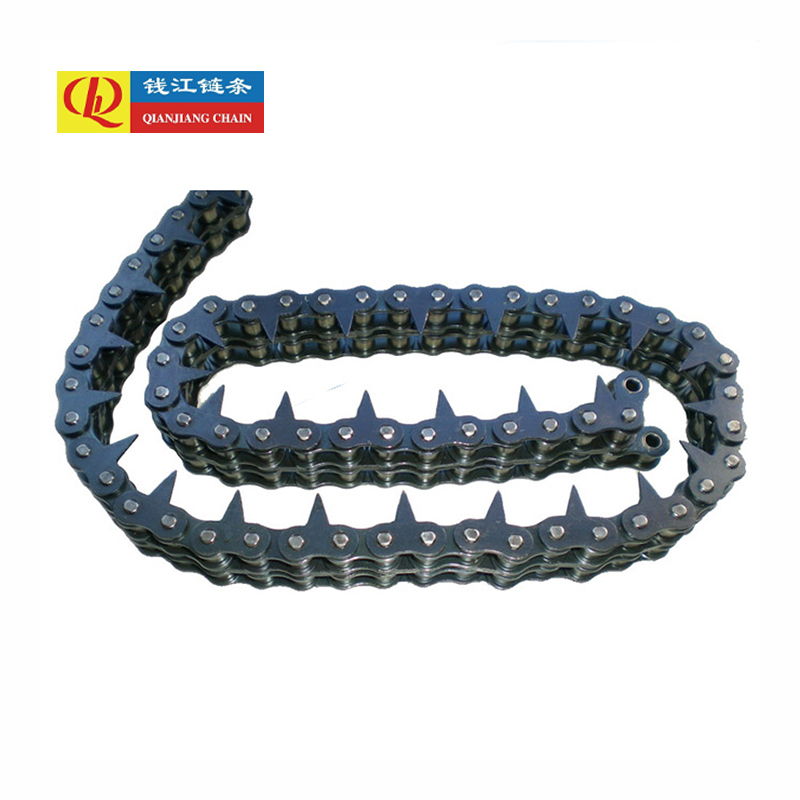
Sharp top chains are a specialized type of conveyor chain featuring pointed, serrated, or textured link surfaces designed to grip and transport products that would otherwise slip on a smooth conveyor surface. Unlike standard flat top chains, the raised sharp points on these chains bite gently into the underside of packaging or product surfaces, providing traction that prevents sliding during transport, particularly on inclines, declines, or curved sections of a conveyor line.
This design makes sharp top chains especially valuable in industries handling lightweight or low-friction products, such as bagged snack foods, plastic film-wrapped items, and certain beverage containers, where standard smooth chain surfaces would allow products to shift, bunch up, or fall out of position during conveyance. By maintaining consistent product positioning, these chains help reduce line stoppages and product damage that can occur when items slip out of alignment.
Common Applications Across Industries
Sharp top chains are used across a variety of manufacturing and packaging environments where product traction is a persistent challenge. Understanding these common applications helps clarify when this chain type offers a meaningful advantage over standard alternatives.
Food and Beverage Packaging Lines
In food packaging environments, products such as bagged chips, wrapped candy, or plastic bottles often have smooth, low-friction surfaces that make them prone to sliding on standard conveyor chains. Sharp top chains help maintain consistent spacing and orientation as these products move through filling, sealing, and packaging stations, reducing the likelihood of jams or misfeeds further down the line.
Beverage Bottling and Can Handling
Beverage bottling facilities frequently rely on sharp top chains to transport bottles and cans through inclined or declined sections of the production line, where gravity alone could otherwise cause containers to slide or tip. The textured surface helps maintain upright positioning and consistent spacing, which is critical for automated filling and capping equipment that requires precise product alignment.
Pharmaceutical and Cosmetic Packaging
Smaller, lightweight items common in pharmaceutical and cosmetic packaging, such as blister packs or small plastic containers, also benefit from the enhanced grip provided by sharp top chains, particularly when these products must navigate curves or elevation changes within compact packaging line layouts.
Materials Used in Sharp Top Chain Construction
The material composition of a sharp top chain significantly affects its durability, hygiene suitability, and performance across different operating environments. The table below outlines common materials and their typical application contexts.
| Material | Key Property | Typical Application |
| Acetal (POM) | Low friction, cost-effective | General dry packaging lines |
| Polypropylene (PP) | Chemical resistance | Wet or chemical-exposed environments |
| Stainless Steel | High strength, hygienic | Food-grade, washdown environments |
Key Factors When Selecting Sharp Top Chains
Choosing the appropriate sharp top chain for a specific conveyor application requires evaluating several operational factors together to ensure reliable long-term performance.
- Product weight and surface texture — heavier or smoother products may require more aggressive tooth patterns for adequate grip.
- Incline or decline angle — steeper conveyor sections generally demand chains with more pronounced traction features.
- Operating environment — wet, chemical-exposed, or high-temperature conditions require material selection matched to those specific demands.
- Hygiene requirements — food and pharmaceutical applications typically require chains that meet specific sanitary design standards.
- Chain pitch and width — these dimensions must align precisely with existing sprocket and conveyor frame specifications.
Maintenance Practices That Extend Chain Lifespan
Regular maintenance plays a significant role in preserving the performance and longevity of sharp top chains within demanding production environments. Periodic visual inspection helps identify worn or damaged teeth before they compromise product grip, allowing for timely replacement of individual chain sections rather than reactive repairs after product handling issues arise on the line.
Proper lubrication, where compatible with the chain material and production environment, helps reduce wear at pivot points and extends overall chain life, though food-grade applications require careful selection of approved lubricants that meet relevant safety standards. Additionally, keeping conveyor tracks free of debris and buildup helps prevent premature wear on both the chain and supporting guide rails, supporting more consistent long-term performance.
Choosing the Right Chain for Reliable Product Handling
Sharp top chains offer a practical solution for facilities struggling with product slippage on inclined, declined, or curved conveyor sections, particularly when handling lightweight or low-friction packaged goods. By carefully matching chain material, tooth design, and dimensional specifications to the specific demands of a production line, facilities can reduce product misalignment, minimize line stoppages, and maintain more consistent throughput across their packaging and material handling operations.
News
-
I. Introduction Conveyor systems form the backbone of modern industrial automation, enabling the eff...
READ MORE -
1. Introduction 1.1 Definition and Basic Concept of Coupling Chains Coupling chains are mechanical d...
READ MORE -
1. Introduction to Leaf Chains Leaf chains are a type of mechanical chain used in a variety of indus...
READ MORE

 +86-13805752016
 +86-571-82875104/82875108
 [email protected]
 No. 80 QianNong West Road, Xiaoshan District, Hangzhou City, Zhejiang Province,China
Copyright © Hangzhou Qianjiang Chain Industries Co., Ltd. All Rights Reserved.
|
 浙公网安备33010902004043号