
 Eng
Eng  中文简体
中文简体Submit feedback
Choosing the Right Conveyor Chains for Reliable Material Handling
Update:23-07-2026
Posted by Admin
Content
The Role of Conveyor Chains in Material Handling Systems
Conveyor chains are mechanical components used to transport materials, products, or bulk goods along a defined path in manufacturing, packaging, agricultural, and processing facilities. Unlike belt conveyors, which rely on a continuous flat surface, chain conveyors use interconnected metal links to pull attachments, slats, or trays through the system, allowing them to handle heavier loads, withstand higher temperatures, and operate in harsher environments than standard conveyor belts typically tolerate.
The right conveyor chain selection depends on the specific load, speed, environment, and layout of the conveyor system. Choosing an incompatible chain type or size often results in premature wear, unexpected downtime, and increased maintenance costs. This article covers the main chain types, material considerations, maintenance practices, and selection criteria needed to keep a conveyor system running efficiently over its expected service life.
Common Types of Conveyor Chains
Conveyor chains come in several distinct configurations, each suited to different load types, speeds, and conveyor layouts. Selecting the correct type is the first step toward building a reliable system.
Roller Chains
Roller chains are among the most widely used conveyor chain types, featuring cylindrical rollers mounted on pins that reduce friction as the chain moves along guide rails or sprockets. They are commonly used in packaging lines, bottling plants, and general industrial conveyors where moderate speed and load capacity are required.
Slat and Apron Chains
Slat chains incorporate flat metal or plastic plates attached across two parallel chain strands, creating a continuous surface capable of carrying loose or irregularly shaped items. Apron chains function similarly but are typically built with overlapping plates to handle heavier bulk materials such as aggregates, ore, or scrap metal without material falling through gaps.
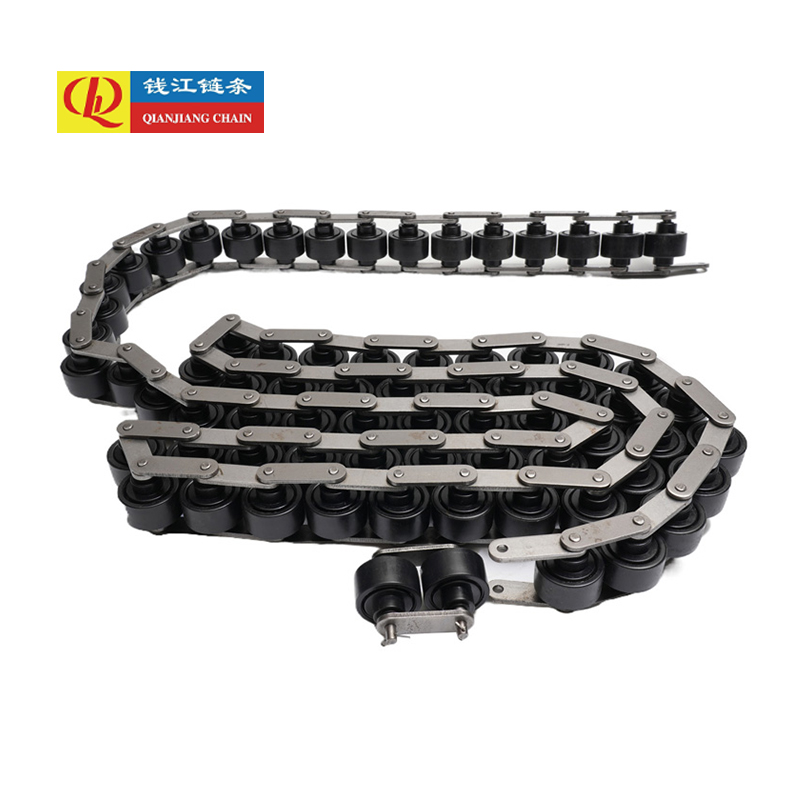
Table Top Chains
Table top chains feature interlocking flat-top links that create a smooth, continuous conveying surface ideal for transporting bottles, cans, and containers in beverage and food packaging lines. Their low-friction, modular design also allows sections to be replaced individually rather than requiring full chain replacement when localized wear occurs.
Bucket Elevator Chains
Used specifically in vertical or inclined conveying applications, bucket elevator chains carry attached buckets that scoop and lift bulk materials such as grain, cement, or coal from a lower level to a higher discharge point, making them essential in agricultural silos and processing plants.
Material Selection for Different Operating Environments
The material a conveyor chain is constructed from significantly affects its performance, corrosion resistance, and expected lifespan in a given operating environment.
| Material | Best Suited Environment | Key Advantage |
| Carbon Steel | Dry, standard industrial conditions | Cost-effective, high tensile strength |
| Stainless Steel | Food processing, washdown environments | Corrosion and rust resistance |
| Nickel-Plated Steel | Mildly corrosive or humid environments | Moderate corrosion protection at lower cost |
| Plastic or Composite | Lightweight loads, noise-sensitive areas | Lightweight, quiet operation |
Facilities operating in food and beverage production typically favor stainless steel chains since they must withstand frequent washdown cycles involving water, cleaning chemicals, and occasional exposure to acidic or salty product residue without degrading or introducing contamination risks.
Factors That Influence Chain Selection
Beyond material and chain type, several operational factors should be evaluated before finalizing a conveyor chain selection for a specific system.
- Maximum load weight per linear foot of conveyor, which determines required tensile strength
- Operating speed, since higher speeds increase wear rates and may require specialized roller or bushing designs
- Ambient temperature range, particularly for ovens, freezers, or outdoor installations facing seasonal extremes
- Presence of abrasive particles or debris that could accelerate wear on pins and bushings
- Chain pitch size, which must match the sprocket teeth to ensure smooth engagement and prevent premature wear
Operating speed deserves particular attention, since chains running at higher speeds generate more heat at the pin and bushing interface through friction, which accelerates wear if adequate lubrication is not maintained or if the wrong chain pitch has been selected for the sprocket configuration.
Lubrication Practices That Extend Chain Life
Proper lubrication is one of the most significant factors affecting conveyor chain longevity, since it reduces friction between pins, bushings, and rollers while also providing a protective barrier against corrosion and contaminant buildup.
Manual Lubrication Schedules
For smaller systems, manual lubrication applied at scheduled intervals using a brush or oil can remains a common practice, though consistency is critical since irregular application leads to uneven wear patterns across the chain's length.
Automatic Lubrication Systems
Larger or continuously operating conveyor systems often benefit from automatic lubrication systems that deliver precise, timed oil application directly to chain pins and rollers. This reduces labor requirements and ensures consistent lubrication coverage, particularly valuable in facilities running multiple shifts where manual lubrication schedules are difficult to maintain reliably.
Signs of Wear and When to Replace a Chain
Recognizing early signs of chain wear helps prevent unexpected failures that can halt production. Chain elongation, measured as the increase in pitch length compared to a new chain, is one of the most reliable indicators of wear, since elongation beyond 2 to 3 percent typically signals that pin and bushing wear has progressed enough to warrant replacement before it causes sprocket damage or chain jumping.
Visual inspection should also include checking for rust formation, cracked or bent links, and uneven wear patterns on rollers, all of which indicate that lubrication, alignment, or load distribution issues may need to be addressed alongside chain replacement to prevent the same wear pattern from recurring on a new chain.
News
-
I. Introduction Conveyor systems form the backbone of modern industrial automation, enabling the eff...
READ MORE -
1. Introduction 1.1 Definition and Basic Concept of Coupling Chains Coupling chains are mechanical d...
READ MORE -
1. Introduction to Leaf Chains Leaf chains are a type of mechanical chain used in a variety of indus...
READ MORE

 +86-13805752016
 +86-571-82875104/82875108
 [email protected]
 No. 80 QianNong West Road, Xiaoshan District, Hangzhou City, Zhejiang Province,China
Copyright © Hangzhou Qianjiang Chain Industries Co., Ltd. All Rights Reserved.
|
 浙公网安备33010902004043号