
 Eng
Eng  中文简体
中文简体Home / News / Industry News / Agricultural Chains for Harvesting, Conveying, and Power Transmission Systems
Submit feedback
Agricultural Chains for Harvesting, Conveying, and Power Transmission Systems
Update:23-02-2026
Posted by Admin
Content
- 1 Functional Role of Agricultural Chains in Farm Machinery
- 2 Common Types of Agricultural Chains and Their Applications
- 3 Material Selection and Surface Treatment for Durability
- 4 Load Capacity, Pitch Selection, and Compatibility
- 5 Maintenance Practices to Extend Service Life
- 6 Operational Challenges in Agricultural Environments
- 7 Integration with Modern Agricultural Equipment
Functional Role of Agricultural Chains in Farm Machinery
Agricultural chains are essential transmission and conveying components used in a wide range of farming equipment, including combines, balers, feed mixers, manure spreaders, and grain handling systems. These chains transfer mechanical power, synchronize rotating assemblies, and move crops or bulk materials under demanding environmental conditions. Unlike standard industrial chains, agricultural chains are exposed to dust, soil, moisture, crop residue, and fluctuating loads, which require enhanced durability and wear resistance.
In harvesting equipment, chains coordinate feeder housings, elevator conveyors, and cutting platforms. In livestock and feed systems, chains move silage, grain, and mixed feed through troughs or storage bins. Proper chain selection directly affects operational stability, downtime frequency, and overall equipment efficiency.
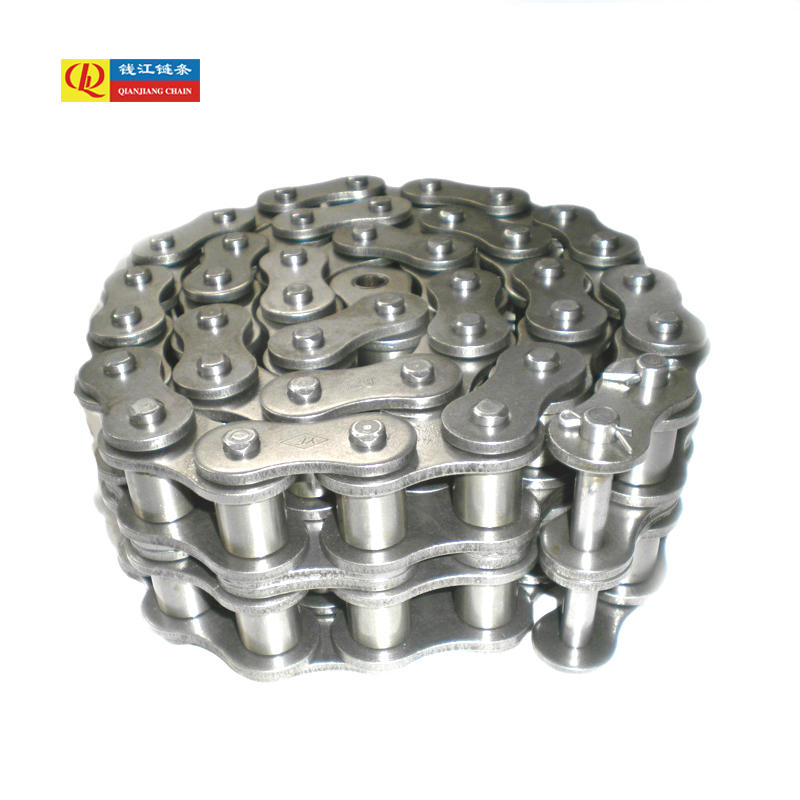
Common Types of Agricultural Chains and Their Applications
Different agricultural operations require specific chain structures to handle varying loads and materials. Selecting the correct chain type ensures mechanical compatibility and reliable performance.
Roller Chains for Power Transmission
Agricultural roller chains are widely used in tractors, seeders, and harvesting machines to transmit rotary motion between shafts. They are typically built with hardened pins, bushings, and rollers to withstand high torque and repeated shock loads. Sealed or pre-lubricated versions are available to reduce maintenance frequency in dusty field environments.
Conveyor Chains for Material Handling
Conveyor agricultural chains are designed with attachments or slats to transport grain, corn, silage, and fertilizers. These chains operate in troughs or enclosed conveyors and must resist abrasion from granular materials. Heavy-duty link plates and corrosion-resistant coatings are often applied to improve service life.
Gathering and Feeder Chains for Harvesters
In corn headers and combines, gathering chains guide crop stalks toward the cutting and threshing units. These chains feature extended lugs or paddles to grip plant material securely. Their alignment and tension are critical to prevent uneven feeding or mechanical jamming during operation.
Material Selection and Surface Treatment for Durability
Agricultural chains operate in abrasive and corrosive environments. Material composition and heat treatment processes determine their ability to resist wear and fatigue. High-carbon alloy steel is commonly used for pins and bushings, followed by carburizing or induction hardening to increase surface hardness while maintaining core toughness.
Surface coatings such as zinc plating or specialized anti-corrosion finishes are applied in equipment exposed to fertilizers or high humidity. In some applications, stainless steel agricultural chains are selected where corrosion resistance outweighs load capacity requirements.
| Material Feature | Function in Agricultural Chains |
| Carburized Steel Pins | Improves wear resistance under heavy load |
| Hardened Bushings | Reduces elongation caused by friction |
| Corrosion-Resistant Coating | Protects against moisture and chemicals |
| Reinforced Side Plates | Handles shock and impact loads |
Load Capacity, Pitch Selection, and Compatibility
Correct pitch and tensile strength selection are critical when replacing or specifying agricultural chains. Pitch determines compatibility with sprockets, while tensile strength ensures safe load handling. Chains with insufficient load rating may stretch prematurely, causing misalignment and inefficient power transfer.
When selecting agricultural chains, operators should evaluate working load limits rather than only maximum tensile strength. Continuous exposure to shock loads, especially in harvesting operations, demands additional safety margins to prevent fatigue failure.
Maintenance Practices to Extend Service Life
Routine inspection and proper lubrication significantly extend the operational lifespan of agricultural chains. Dust and debris accelerate abrasive wear, making periodic cleaning essential in field applications. After cleaning, lubrication should be applied to penetrate pin and bushing interfaces, where most wear occurs.
Recommended Maintenance Actions
- Check chain tension and alignment regularly to prevent uneven wear.
- Measure chain elongation to determine replacement timing.
- Inspect sprocket teeth for wear that may accelerate chain damage.
- Apply suitable lubricants resistant to washout in wet environments.
Failure to maintain correct tension can cause skipping or disengagement from sprockets, especially under heavy loads. Timely replacement prevents damage to connected components and reduces unexpected downtime during peak harvesting seasons.
Operational Challenges in Agricultural Environments
Agricultural chains operate in fluctuating temperatures, muddy fields, and high-impact conditions. Soil particles mixed with moisture create abrasive slurry that accelerates pin and bushing wear. Additionally, sudden load variations during crop intake or bale compression introduce stress cycles that test fatigue resistance.
To address these challenges, manufacturers optimize chain geometry, heat treatment depth, and surface hardness distribution. Selecting agricultural chains designed specifically for farm equipment rather than general industrial use improves operational stability and reduces long-term maintenance costs.
Integration with Modern Agricultural Equipment
Modern agricultural machinery incorporates higher horsepower engines and automated control systems, increasing mechanical demands on drive components. Agricultural chains must synchronize accurately with sensors, hydraulic drives, and electronic monitoring systems. Stable chain performance ensures consistent material flow and protects integrated control systems from overload conditions.
As farm operations scale and mechanization intensifies, agricultural chains remain a fundamental mechanical element supporting efficient harvesting, feeding, and transport processes. Careful selection, correct installation, and systematic maintenance contribute directly to long-term equipment reliability and productivity.
News
-
I. Introduction Conveyor systems form the backbone of modern industrial automation, enabling the eff...
READ MORE -
1. Introduction 1.1 Definition and Basic Concept of Coupling Chains Coupling chains are mechanical d...
READ MORE -
1. Introduction to Leaf Chains Leaf chains are a type of mechanical chain used in a variety of indus...
READ MORE

 +86-13805752016
 +86-571-82875104/82875108
 [email protected]
 No. 80 QianNong West Road, Xiaoshan District, Hangzhou City, Zhejiang Province,China
Copyright © Hangzhou Qianjiang Chain Industries Co., Ltd. All Rights Reserved.
|
 浙公网安备33010902004043号