
 Eng
Eng  中文简体
中文简体Submit feedback
Special Application Scenarios of Stainless Steel Chains
Update:29-12-2025
Posted by Admin
Thanks to their corrosion resistance, ability to withstand high and low temperatures, and hygienic, easy-to-clean properties, Stainless Steel Chains are mainly applied in industrial environments with strict operating requirements. In addition, they are also used in certain daily and specialized fields where durability and environmental resistance are required.
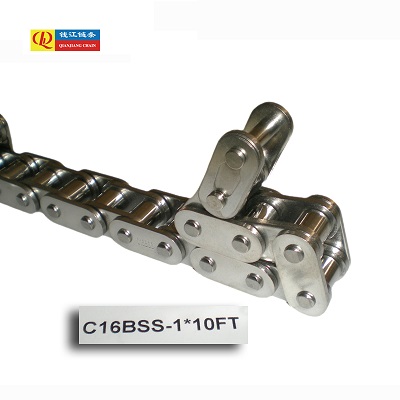
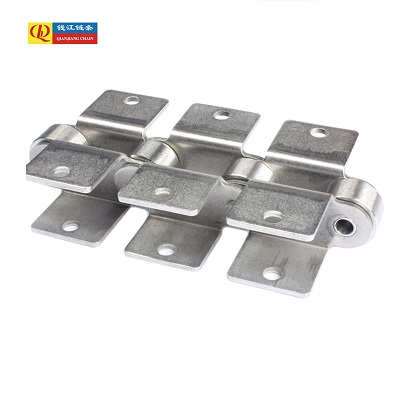
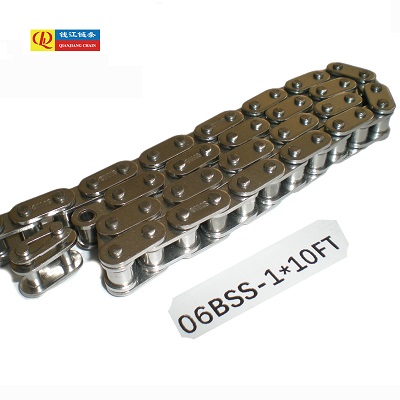
Core Application Scenarios
Major Industrial Applications
Industries with strict hygiene requirements: Stainless Steel Chains are widely used in food, dairy, and beverage processing, filling, and packaging lines, where cleanliness, corrosion resistance, and washdown capability are essential.
Industries with chemical corrosion risks: In chemical processing, pharmaceutical production, and wastewater treatment, Stainless Steel Chains are used for material conveying and mechanical transmission in corrosive environments.
Applications requiring resistance to high and low temperatures: These chains are suitable for high-temperature operations such as baking and heat treatment (approximately up to 400 °C for 304 stainless steel, and higher for 316 stainless steel), as well as low-temperature applications such as freezing systems. Austenitic stainless steels can operate at temperatures as low as −100 °C.
Other manufacturing and processing industries: Stainless Steel Chains are used in equipment for printing, rubber processing, textile manufacturing, and metallurgy, mainly for power transmission and material handling.
Other Industrial and Special Applications
Packaging and conveying machinery: Used as transmission or conveying components in various packaging, logistics, and production systems.
Outdoor and harsh environments: Applied in agricultural machinery and marine engineering, including ships and offshore platforms, where resistance to rain, humidity, and seawater corrosion is required.
Automation equipment: Used as drive chains or connecting components in automated production lines and mechanical systems.
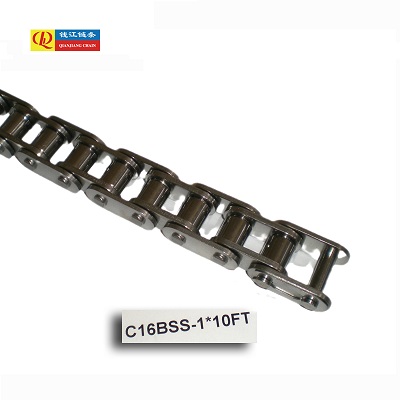
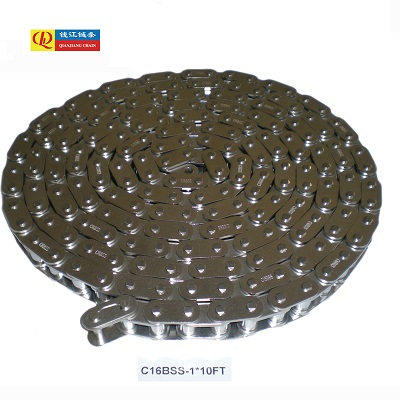
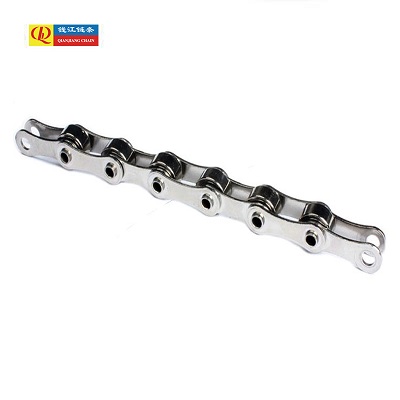
How to Choose the Right Stainless Steel Chains
When selecting Stainless Steel Chains, in addition to understanding the application scenario, material selection and functional type are two key factors that directly affect service performance.
Selection by Material
304 Stainless Steel (06Cr19Ni10):
The most commonly used stainless steel material, offering good corrosion resistance. It is suitable for most food, chemical, and general industrial environments, especially where water exposure or frequent cleaning is required. The typical operating temperature range is approximately −20 °C to 400 °C.
316 Stainless Steel (06Cr17Ni12Mo2):
Due to the addition of molybdenum, 316 stainless steel provides stronger corrosion resistance than 304, particularly against chloride corrosion. It is suitable for seawater environments, strong acidic or alkaline conditions, paper manufacturing processes, and applications with non-magnetic requirements. It also offers improved high-temperature performance. Typical applications include marine equipment, coastal factories, highly corrosive chemical plants, and advanced medical devices.
Martensitic Stainless Steel (such as 2Cr13):
This material has corrosion resistance similar to carbon steel but provides higher mechanical strength. It performs well in low-temperature environments, with operating temperatures down to approximately −70 °C. It is suitable for applications with high strength requirements and relatively low corrosion exposure, particularly in low-temperature conditions.
Selection by Functional Type
Transmission Chains:
Mainly used for power transmission to drive mechanical operation. These chains are characterized by high precision and short pitch. Common types include A and B series short-pitch precision roller chains and silent chains.
Conveyor Chains:
Designed primarily for carrying and conveying materials. Greater emphasis is placed on load-bearing surfaces and structural stability. Common subtypes include flat top chains, double-pitch conveyor chains, and hollow pin chains.
Special Chains and Attachment Chains:
Used for specific functions or for installing attachments, such as plate chains for lifting applications or chains equipped with mounting plates and fixtures.
Other Important Selection Factors
Operating temperature: Chain strength decreases as temperature increases. For applications above 400 °C, temperature correction factors should be consulted for accurate strength calculations. The working temperature must remain within the allowable range of the selected material.
Load requirements: Based on the transmitted force or carried load, an appropriate chain size and strength grade should be selected. Overloading must be avoided. Decorative or general-purpose chains must not be used for lifting or hoisting operations.
Maintenance and care: Stainless steel is not completely immune to corrosion. In harsh environments, regular inspection and cleaning are still necessary. Proper lubrication helps reduce wear and extend service life.
News
-
I. Introduction Conveyor systems form the backbone of modern industrial automation, enabling the eff...
READ MORE -
1. Introduction 1.1 Definition and Basic Concept of Coupling Chains Coupling chains are mechanical d...
READ MORE -
1. Introduction to Leaf Chains Leaf chains are a type of mechanical chain used in a variety of indus...
READ MORE

 +86-13805752016
 +86-571-82875104/82875108
 [email protected]
 No. 80 QianNong West Road, Xiaoshan District, Hangzhou City, Zhejiang Province,China
Copyright © Hangzhou Qianjiang Chain Industries Co., Ltd. All Rights Reserved.
|
 浙公网安备33010902004043号