
 Eng
Eng  中文简体
中文简体Home / New Products/Technologies / New Technological Applications of Qianjiang (QJ) “Stacker Chains” / “Plate Chains”
Submit feedback
New Technological Applications of Qianjiang (QJ) “Stacker Chains” / “Plate Chains”
Update:15-12-2025
Posted by Admin
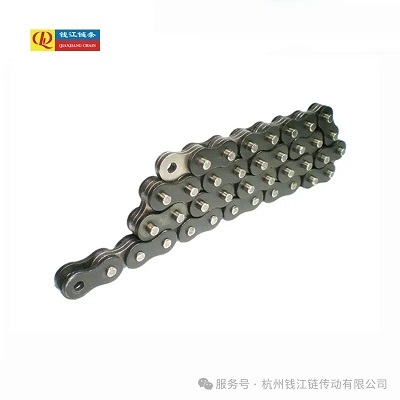
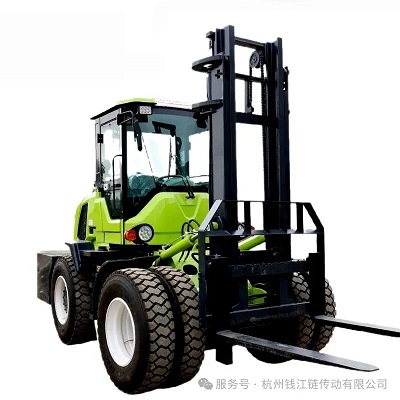
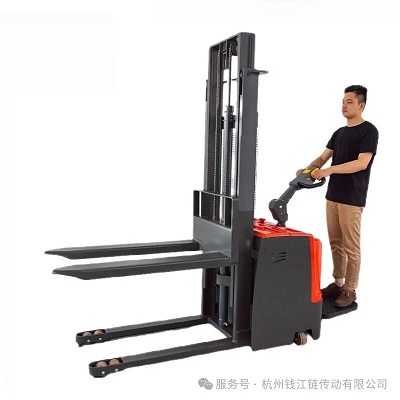
The “stacker chain” / “plate chain” serves as the core transmission and load-bearing component of stacker trucks. Hangzhou Qianjiang Chain Industries Co., Ltd. produces plate chains designed for heavy-duty applications, high wear and fatigue resistance, and precise transmission performance. The chains are available in three major series: ISO-LH, LL, and AL, featuring the following characteristics:
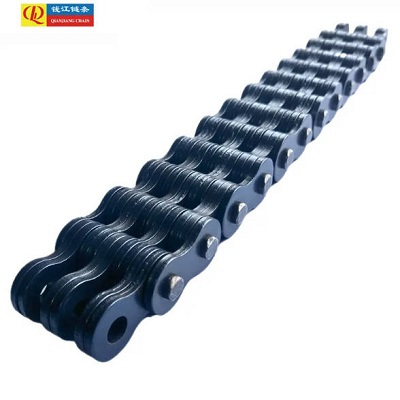
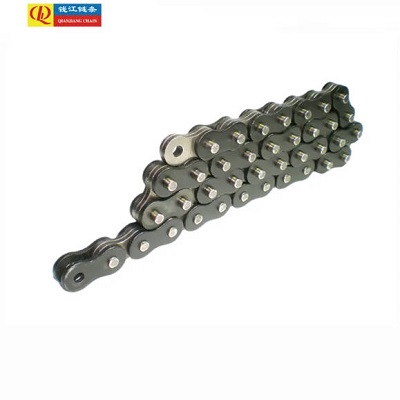
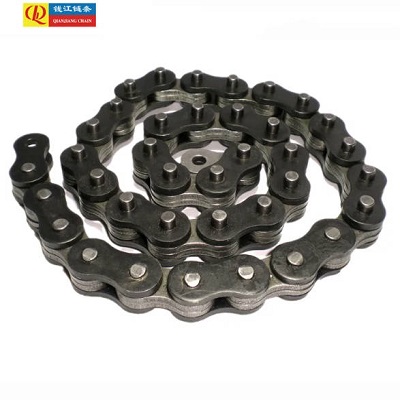
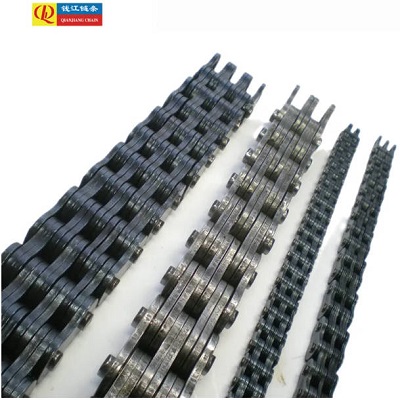
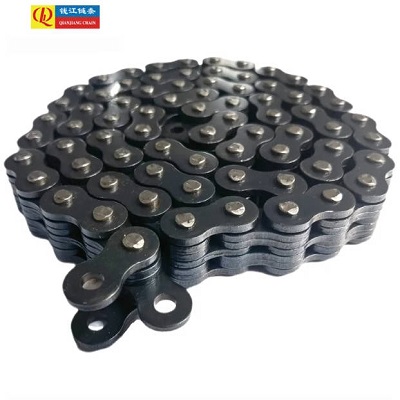
Plate Chains
1. High Load-Bearing Strength: Designed to support the weight of forks and cargo, these chains are made from high-strength alloy structural steel, offering superior load capacity and impact resistance.
2. Wear and Corrosion Resistance: Frequently meshing with sprockets and exposed to dust or oil, the chain surfaces are treated with chemical oxidation, nickel alloy plating, or zinc-nickel alloy plating, making them suitable for humid or dusty warehouse environments.
3. Precise and Stable Transmission: Uniform pitch and minimal meshing clearance ensure synchronized lifting and traveling actions, preventing cargo misalignment.
4. Strong Fatigue Resistance: Operating at heights with frequent start-stop cycles and repeated lifting/lowering requires high toughness to prevent fracture risks.
5. Low Maintenance Dependency: Simple structure compatible with periodic grease lubrication, extending maintenance-free service intervals.
How to Select Stacker Chains
1. Match Core Chain Parameters: Verify the chain model in the original manufacturer’s manual (e.g., pitch, number of strands) and rated load to ensure compatibility with the vehicle’s maximum load and sprocket pitch, preventing poor meshing.
2. Select Material and Surface Treatment According to Working Conditions: For heavy-duty or high-frequency use, choose chains made of high-strength alloy structural steel; for humid or cold-chain environments, select chains with zinc-nickel or nickel plating.
3. Check Key Performance Indicators: Tensile strength should be at least 1.5 times the stacker’s rated load; fatigue strength must accommodate daily lifting cycles; pitch tolerance should be controlled within ±0.1 mm to ensure precise transmission.
4. Confirm Installation and Compatibility: Choose chains based on the installation space (single-strand or multi-strand), and prefer original brand chains to improve compatibility.
News
-
I. Introduction Conveyor systems form the backbone of modern industrial automation, enabling the eff...
READ MORE -
1. Introduction 1.1 Definition and Basic Concept of Coupling Chains Coupling chains are mechanical d...
READ MORE -
1. Introduction to Leaf Chains Leaf chains are a type of mechanical chain used in a variety of indus...
READ MORE

 +86-13805752016
 +86-571-82875104/82875108
 [email protected]
 No. 80 QianNong West Road, Xiaoshan District, Hangzhou City, Zhejiang Province,China
Copyright © Hangzhou Qianjiang Chain Industries Co., Ltd. All Rights Reserved.
|
 浙公网安备33010902004043号